Demand-based certificate for residential buildings: what you need to know

You want to sell or let a property – but what about its energy efficiency? The demand-based certificate for residential buildings shows in black and white how much energy your building actually uses – regardless of how occupants behave. That is exactly why it is so valuable for buyers and tenants.
What you need to know
What exactly is a demand-based certificate?
The demand-based certificate for residential buildings is an official document that calculates the theoretical energy demand of a building.
Unlike the consumption-based certificate, which is based on actual consumption data of the occupants, the demand-based certificate is based on a technical analysis of the building envelope, heating system and other structural factors.
It shows how energy-efficient a residential building is regardless of user behaviour – and is therefore considered particularly objective and meaningful.
When is the demand-based certificate required?
The demand-based certificate is not always mandatory – but in certain situations it is unavoidable. The Building Energy Act (GEG) clearly states when an energy certificate and in particular a demand-based certificate must be presented. Non-compliance can result in fines of up to €10,000.
These cases make the demand-based certificate mandatory:
- Sale or letting of residential buildings without a valid certificate.
- Older buildings with building application before November 1977, if not energetically modernised.
- New builds – as no 3-year consumption data exists yet.
- Buildings with fewer than five units when no consumption data is available.
Under the GEG, certain details from the energy certificate must already be stated in the property advert – e.g. final energy demand and efficiency class. If there is no valid certificate, the building may not be offered at all.
What data is required?
To create a demand-based certificate online, detailed information about the building is required. Energy demand is calculated purely from the technical situation. The more precise the information, the more meaningful the result.
This information is necessary:
| Category | Required information |
|---|---|
| Building data | Year of construction, number of units, location and use, etc. |
| Building components | Details on roof, external walls, windows, basement ceiling and their insulation, etc. |
| Heating technology | Type of heating, year of construction, efficiency, hot water preparation if applicable, etc. |
| Ventilation and cooling | Type and energy source, e.g. central ventilation or climate systems, etc. |
| Renewable energy | Use of solar thermal, photovoltaics, heat pumps, etc. |
Creation via the energyausweis.de platform collects this data conveniently through an online form – on mobile or desktop, saveable and resumable at any time. After entry, a certified energy consultant personally checks all details and creates the certificate in accordance with GEG 2025 – legally compliant and including the official registration number.
What does the demand-based certificate cost?
The cost of a demand-based certificate depends strongly on how and where you have it prepared. While an on-site energy consultant may charge around €300 to €500, the online option is significantly cheaper – with the same legal validity.
At energyausweis.de you pay only 99€ incl. VAT for residential buildings, for example. A pure consumption-based certificate costs 49€ by comparison, and an Energyausweis Smart™ (combination of consumption and demand-based) is available from 129€.
All offers at energyausweis.de include personal review by certified energy consultants, issue according to GEG 2025, 10-year validity and digital delivery as PDF with official registration number. Payment is possible without advance payment, even with 7 days’ payment deferral – a real plus.
Tip: For property professionals such as agents or managers there are bulk invoicing and partner terms. That further reduces the certificate cost per building.
What can owners do with the result?
A demand-based certificate gives owners valuable information on the energy quality of their building. The figures help compare with other properties and show concrete modernisation potential:
| Value | What it means | Possible conclusions |
|---|---|---|
| Final energy demand | Indicates how much energy the building needs per year per square metre. | High value = high energy consumption → refurbishment worthwhile |
| Primary energy demand | Additionally takes into account the environmental impact of the energy source. | Assess environmental impact → e.g. improve by using renewable energy |
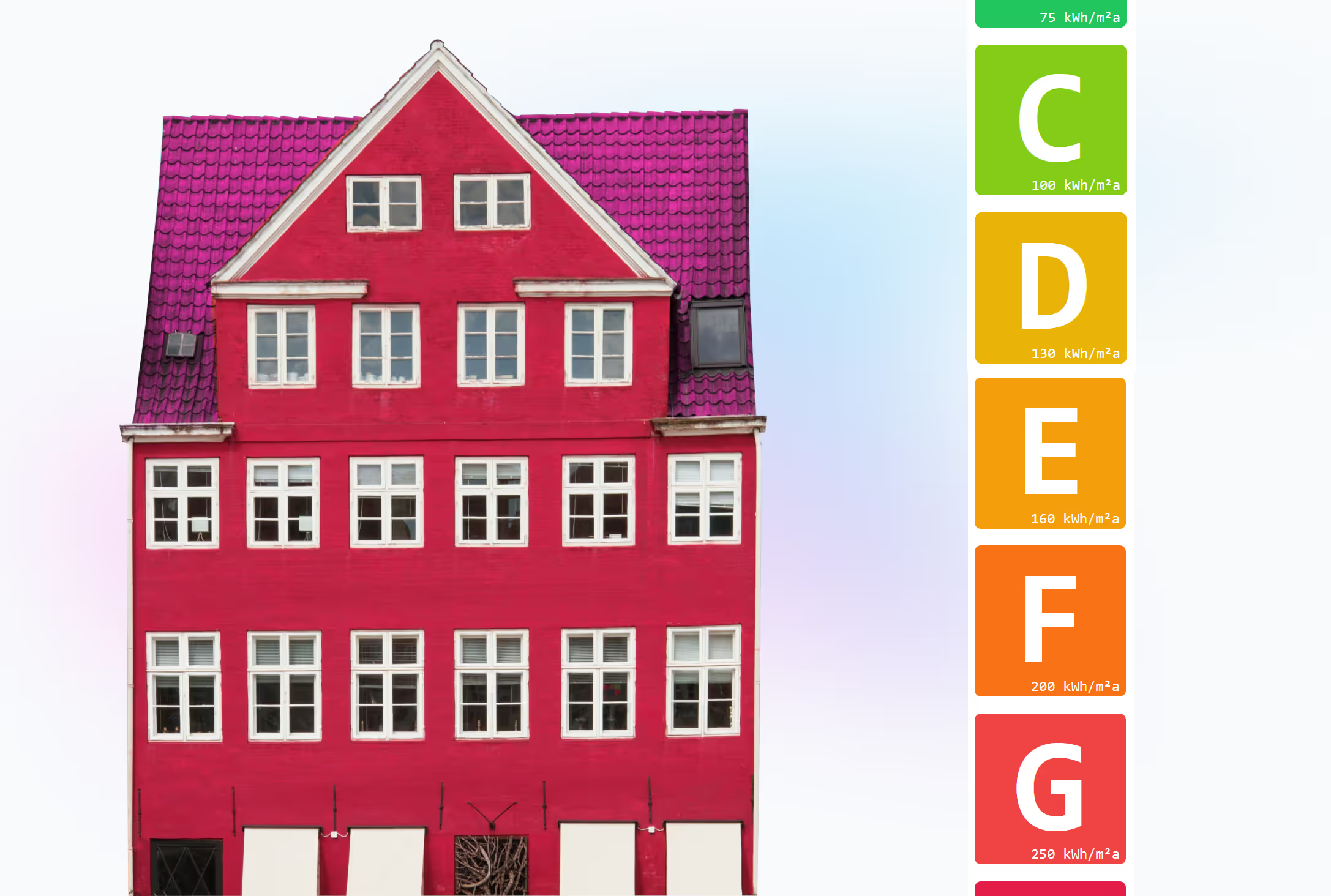
| Energy efficiency class | Classification from A+ (very efficient) to H (very inefficient) | Good class = selling point / Poor class = potential for value increase through refurbishment |
| Greenhouse gas emissions | Show the climate impact of energy consumption (e.g. CO₂ emissions). | Basis for climate-friendly measures and possible funding programmes |
| Modernisation recommendations | Concrete suggestions for improving energy efficiency. | Guide for targeted refurbishment, e.g. new heating or better insulation |
With this information owners can make informed decisions – e.g. on refurbishment or sale. A good demand-based certificate increases transparency and the attractiveness of a property on the market. Potential buyers and tenants increasingly value energy efficiency and long-term cost savings.
Note: Listed buildings are exempt from the energy certificate requirement. Under § 79(4) of the Building Energy Act (GEG), no energy certificate need be issued for listed monuments. We still recommend having an online consumption-based certificate prepared to build trust with buyers or tenants.
Demand-based certificate for residential buildings: mandatory document with added value
The demand-based certificate is often a legal requirement but also a valuable tool for owners, sellers and agents. It provides objective information on the energy efficiency of a residential building and clearly shows where modernisation potential lies. Especially for older buildings it is worth looking at the figures to plan targeted refurbishment or increase market value.
To better understand the figures in detail, see our guide Understanding the energy certificate. For a price and provider overview we recommend Energy certificate costs: 10 online providers compared. And if you want to know what changes are being discussed or planned from 2026, read Energy certificate 2026: new A–G scale and extended requirements. Retrofitted photovoltaics mainly affects the class in a demand-based certificate — often not in a consumption-based one: Photovoltaics and the energy certificate: when solar improves the efficiency class — and when it doesn't.
If you want to create an energy certificate online, energyausweis.de is a reliable partner: legally compliant, certified and with personal review by experienced energy consultants – no advance payment. A demand-based certificate brings clarity – for you, your buyers and the environment.