Does Thermography Replace the Energy Certificate?

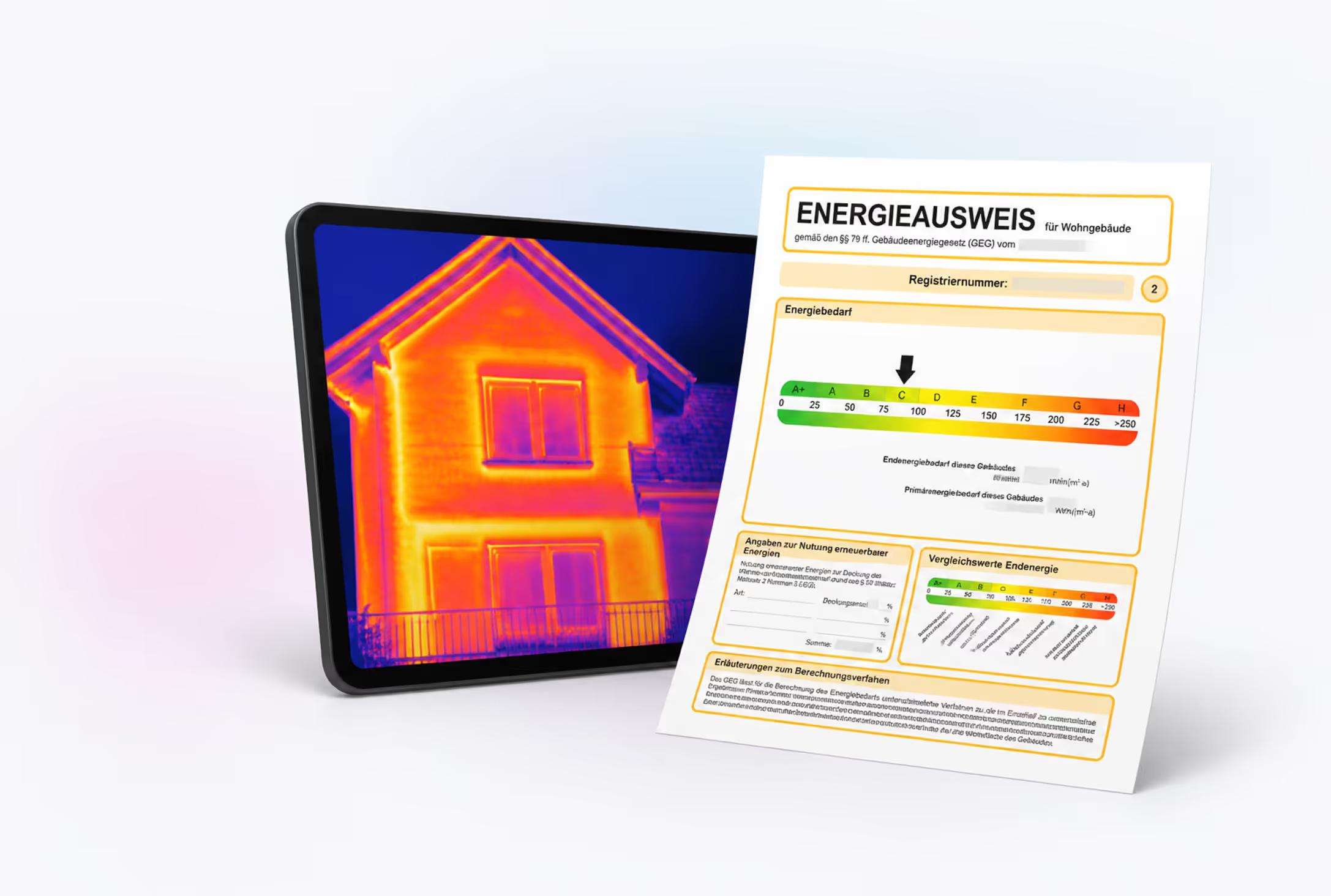
A colourful heat image often feels like a full picture of a home's energy performance. When you sell or let, agents, buyers, and listing portals still require the energy performance certificate (Energieausweis), not the heat image. The short answer: thermography does not replace the certificate. Thermal imaging answers different questions. Only if you keep the two tools apart will you avoid wasted retrofit spending or delays when selling or letting.
The certificate check shows which certificate fits your building, regardless of any heat image.
Certificate check
In diesem Artikel erfahren Sie …
Sale and letting duties still follow the Building Energy Act (GEG), which Article 2 of the Building Modernisation Act (GModG) recasts from 1 January 2027. The duty logic remains: a registered energy certificate, not a thermography report. Read the timeline in GModG promulgated: the new certificate from 1 January 2027.
Short answer: No — thermography does not replace the certificate
Thermography (thermal imaging) is a qualitative diagnosis of the building envelope: it shows where surfaces are warmer or colder than their surroundings and where heat flows look unusual. The energy certificate is a registered document with defined energy benchmarks, issued by authorised experts and legally required when you sell or let.
A striking photo does not replace showing the certificate at a viewing or handing it over at the latest when the contract is signed (§ 80 GEG). Putting only a heat image in the agent folder does not meet the duty, however impressive the picture looks.
What thermography is
Thermography means infrared-based heat images of the building surface. Special cameras measure not one point like a thermometer but thousands of points at once and map them in false colours. At a glance you can see whether a façade, window lintel, or roof junction looks unusually warm or cold.
The glossary of energy certificates defines thermography briefly as a way to show heat distribution. This article is the first in-depth piece on the topic. It focuses on how thermography differs from the energy certificate.
What it does — and what it does not
Thermography is good at making envelope weak points visible: leaky junctions, thermal bridges, or poorly installed components may show up on a heat image before they appear on a heating bill. In practice, DIN EN 13187 covers qualitative infrared work on the building envelope.
What thermography does not do:
- It does not provide an efficiency benchmark or a registration number for the certificate database.
- It does not replace heating bills or building data for a consumption certificate.
- Single app shots are not a professional thermography report.
Results also depend on conditions. Reliable outdoor shots often need a clear temperature difference between indoors and outdoors. The Energiesparkommissar video on thermography in energy advice states that for a sound survey the gap should be at least 15 degrees Celsius. With about 20 °C indoors, that means cold weather outside. If weather and temperature difference are wrong, colourful images are easy to misread.
Experienced energy advisers add: they spot many building weaknesses without a camera. Thermography is a tool, not a substitute for professional judgement.
What the certificate delivers
The energy certificate answers the question when you sell or let: how efficient is the building compared with others, and which modernisation recommendations does the document contain? Depending on the building you get a consumption certificate from real use or a demand certificate from building balance. Which type is mandatory is set in § 80 GEG and § 82 GEG together. See When is a demand certificate mandatory?.
For the market and authorities, the certificate is registered, listing fields must appear in ads (§ 87 GEG), and it must be shown and handed over. The full process with deadlines and fines is in the compliance overview.
Decide by your question
Do not focus on the gadget; focus on your question. The table below classifies typical situations. Each row shows whether thermography, the certificate, or both fits your question and which practical step makes sense next.
| Your question | Thermography | Energy certificate | Practical next step |
|---|---|---|---|
| I want to sell or let | Optional (marketing), does not replace legal duty | Mandatory: show at viewing, hand over at latest on contract (§ 80 GEG) | Certificate check, then Order certificate |
| Where does my home lose heat — before retrofit? | Very useful: find weak points at façade, windows, junctions | Complementary: benchmark and measure list for priorities | Plan thermography; also use the certificate for orientation |
| Is a heat image enough for buyers or banks? | No — no registration number, no comparable benchmark | Yes — recognised proof with class or values | Create certificate |
| I only have a smartphone heat camera app | Hint only, not a DIN EN 13187 report | Unchanged — app replaces neither protocol nor certificate | No shortcuts when selling or letting; if duty applies, read the compliance overview |
| New build — do I need both? | Optional for envelope defects | Mandatory on completion (demand / balance certificate) | Check demand certificate duty |
When thermography helps
Thermography pays off when you want to retrofit and need to know where the envelope loses most heat. A heat image can help prioritise measures: fix the leaky façade or window band first, then tune the heating. You will find practical examples and how thermography fits next to the certificate at public utilities or specialist thermography providers.
Plan shots in colder phases with stable indoor temperature. Patterns differ indoors and outdoors. Outdoors, warm spots often point to losses; indoors, cold surfaces may mark the weak point. Mixing that up leads laypeople to misread images.
When the certificate is mandatory
As soon as you sell, let, lease, or hire out property, the energy certificate is usually mandatory. It is neither optional nor replaceable by an energy “selfie”. That holds whether or not you also commission a heat image.
Voluntarily, a certificate still helps when you negotiate transparency with a bank, buyer, or tenant: it delivers comparable benchmarks and documents modernisation suggestions. How to read efficiency class and heating-cost logic is in Heating costs and reading the certificate.
Combining retrofit and sale
Retrofit and sale can come one after the other or at the same time. A sensible order:
- Clarify the duty: If a sale or letting is coming, clarify certificate type and deadlines first, not the heat image.
- Retrofit diagnosis: If you plan a larger budget, thermography can target weak points.
- Update the certificate: After major work, a new certificate often makes sense when values and tips are outdated.
The certificate remains the market document; thermography remains the site tool. You avoid double cost only if you separate clearly which question each tool answers.
Myths about apps and the energy check
Three mistakes come up often:
- “A heat image is enough when selling.” Legally no. Benchmark, validity, and registration are missing.
- “The thermography app replaces the expert.” Apps do not deliver norm-grade analysis or certificate data.
- “Thermography is mandatory for the demand certificate.” Balance relies on building data, not automatically an IR report.
If you mix these up, you pay twice (thermography plus certificate under time pressure) or risk fines and listing delays. The process is described in the compliance overview.
How to choose between thermography and certificate
- Clarify your question: Decide whether you are selling, letting, or planning a retrofit.
- Check the duty: When selling or letting, § 80 GEG comes first, not the heat image.
- Use the table: Pick the row that matches your situation.
- Thermography only for retrofit: Plan shots with a realistic weather window.
- Start the certificate check: Clarify consumption or demand certificate.
- Order before you list, so viewing duties and § 87 GEG listing fields are met.
Frequently asked questions
Does thermography replace the certificate?
No. Thermography shows qualitative weak points. The energy certificate provides registered benchmarks and meets legal duties when you sell or let.
Is thermography mandatory when selling?
No. The valid energy certificate is mandatory. Heat images may add information but do not replace the certificate.
When is thermography worthwhile?
Before a retrofit when you want to find envelope weak points, and when weather and temperature difference are right (often at least 15 °C between indoors and outdoors in practice).
Is a heat camera app enough as a certificate?
No. An app delivers neither a registered certificate nor a professional thermography report to DIN EN 13187.
Must an energy adviser use thermography for the certificate?
Not necessarily. Issuing follows GEG rules with consumption or balance data. Thermography may complement but is not a statutory requirement when issuing.
Conclusion
Thermography and the energy certificate answer different questions. That is why owners confuse them so often. A heat image feels like a quick energy check: vivid and easy to grasp. The certificate looks formal, with benchmark, class, and registration number. When you sell or let, only the second document counts legally. Thermography remains voluntary diagnosis; the certificate fulfils a legal duty and is an accepted market standard.
If you can only focus on one, set the order by your next step. When sale or letting is next, the certificate check and timely ordering belong at the top of your to-do list, before the listing and viewings. If you plan a retrofit, thermography can help prioritise envelope work. The certificate provides the comparison frame and modernisation hints on page 4. Both together pay off especially when you improve the house first and sell later. The updated certificate records what you improved; heat images guide work on site.
Outlook: Even when certificates become more digital and data-rich from 2027, the split does not change. No thermography report replaces showing, listing fields, or handover under § 80 GEG. Two traps stay common. Some providers sell “energy check” and certificate in one bundle without stating the duty clearly. Other owners retrofit and then list with an outdated certificate. Keeping the tools apart saves double cost and avoids delays. Use the table above as a quick reference. If you are unsure about consumption or demand certificate, see When is a demand certificate mandatory?, whether or not you also commission heat images.