In the energy certificate, useful floor area is not the same as living area

You have received your energy certificate and are surprised by the square metre figure? You are not alone. The so-called useful floor area (AN) often differs significantly from the living area. That can be confusing, but it is normal – and legally intended.
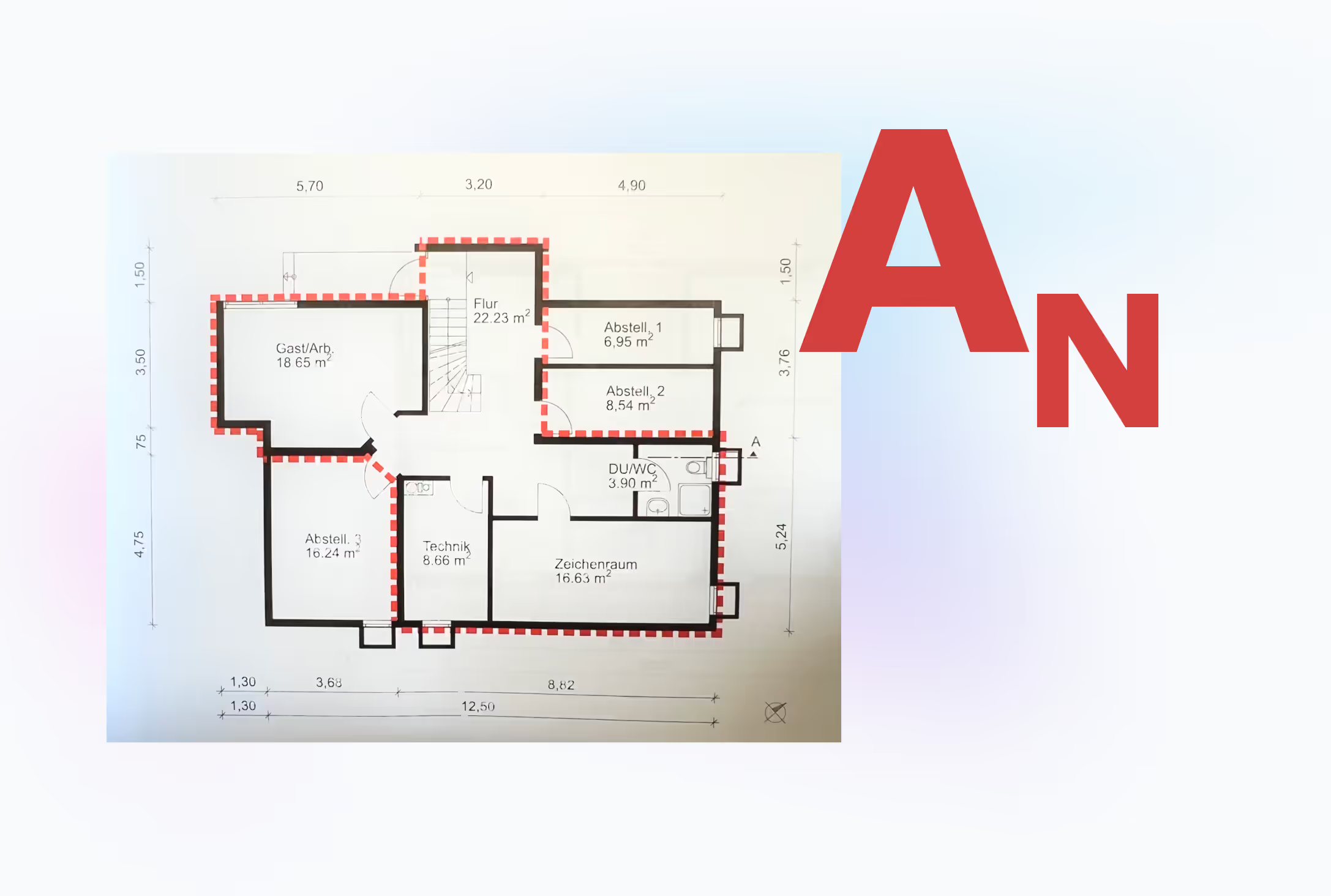
What you need to know
How is the useful floor area calculated in energy certificates?
The useful floor area AN is one of the most important figures in the energy certificate. It is the reference for the calculated or measured energy consumption of a building and is determined differently depending on the type of certificate. The Building Energy Act (GEG) clearly sets out in §§ 81 and 82 how the AN area is to be calculated.
Calculation for the consumption-based certificate — § 82 GEG
When the energy certificate is based on actual energy consumption, the weather-adjusted final energy consumption and primary energy consumption per square metre of useful floor area must be stated. These figures are based on a 36-month billing period, with longer vacancies taken into account in the calculation.
If the useful floor area is not known, § 82(2) GEG allows a rule-of-thumb derivation:
- 1.35 × living area for residential buildings with up to two units and a heated basement,
- 1.2 × living area for all other residential buildings.
Additional rules apply:
- +20 kWh/(m²·a) if consumption for decentralised hot water is unknown,
- +6 kWh/(m²·a) if room cooling is present.
This simplified method is used especially for existing buildings. If complete building documents are available in sufficient quality, the useful floor area can also be calculated exactly. All heated rooms are included, including basement and attic areas if heated. The calculation follows DIN 277, which defines areas and volumes of buildings.
Calculation for the demand-based certificate — § 81 GEG
For the demand-based certificate detailed technical rules apply. The certificate is not based on consumption data but on a calculated energy demand. The useful floor area (AN) is not estimated but derived exactly from the heated building volume (Ve) according to DIN V 18599.
How AN is calculated for the demand-based certificate
Standard formula for typical storey heights (between 2.5 m and 3 m):
AN = 0.32 × Ve
For buildings with non-standard storey heights:
AN = (1 / hg - 0.04) × Ve
Here hg is the mean storey height. This formula adjusts for particularly low or high rooms – e.g. in older or half-timbered buildings with unusual ceiling heights.
The exact calculation of the useful floor area is a prerequisite for determining all energy figures such as final energy demand or primary energy demand. It ensures that the certificate gives a realistic picture of energy quality independent of user behaviour.
For new builds and comprehensively refurbished buildings, the demand-based certificate with this exact AN calculation is mandatory.
What exactly does the GEG (Building Energy Act) specify?
The Building Energy Act (GEG) uniformly regulates the requirements for the energy quality of buildings across Germany – and thus also the issue of energy certificates. The type of certificate is decisive:
| GEG section | Content |
|---|---|
| § 81 GEG | Applies to the demand-based certificate: Energy demand is determined on the basis of building calculations according to DIN V 18599. The useful floor area is defined exactly from the heated or cooled zones. |
| § 82 GEG | Applies to the consumption-based certificate: Energy consumption is calculated from average consumption data over 36 months – in relation to the useful floor area. |
| § 82(2) | If the actual useful area is not known, the GEG allows a rule-of-thumb determination of the AN area: 1.35 × living area (for small residential buildings with heated basement) or 1.2 × living area (for all other residential buildings). |
| § 82(3)–(5) | Governs weather adjustment of consumption, treatment of vacancies and permitted data sources (heating bills, energy supplier data, consumption readings). |
| § 50 GEG | Defines permitted simplified data collection, especially for existing buildings with incomplete documentation. |
The calculation of the useful floor area is clearly set out in the GEG. So values in the energy certificate that differ from the living area are not an error but legally intended.
Important questions about the useful floor area
How does the useful floor area (AN) differ from the living area?
Living area includes only actually habitable rooms such as bedrooms or kitchen. The useful floor area (AN) goes further: it also includes indirectly heated areas such as corridors or stairwells. So AN is always larger than living area – by design. For energy certificates it is sometimes calculated by a rule of thumb (e.g. 1.2 or 1.35 × living area).
What is the link to the heating cost ordinance?
None. The heating cost ordinance uses living or usable area to distribute costs. The useful floor area (AN) is only relevant for energy certificates and does not play a role in operating cost statements.
Why is the useful floor area calculated differently for consumption-based and demand-based certificates?
For the consumption-based certificate the calculation is simplified: living area is multiplied by a factor (1.2 or 1.35). For the demand-based certificate, AN is calculated exactly from the heated building volume (Ve).
What special rules apply to half-timbered and older buildings?
Half-timbered buildings often have non-standard storey heights or difficult floor plans. Here an exact calculation with the special formula is required. For older buildings only heated rooms count towards AN. If the building is listed, the energy certificate requirement may not apply at all.
What should I bear in mind when entering data so that the useful floor area is calculated as accurately as possible?
Careful data entry is essential for accurate results:
- Consumption-based certificate: state living area correctly and choose the right factor.
- Demand-based certificate: enter building dimensions, floor plan, wall lengths and storey heights precisely.
- Only include heated areas.
- Errors lead to distorted results in the certificate.
How does the useful floor area affect the overall result in the energy certificate?
The useful floor area is the reference for all energy figures in the certificate – e.g. kWh per square metre per year. An incorrectly calculated AN can distort the efficiency class. Example: an AN that is too small leads to apparently higher energy consumption per m² – which worsens the efficiency class.
Useful floor area in a nutshell
The useful floor area (AN) is the key to assessing a building’s energy efficiency and is not the same as living area. Its exact or rule-of-thumb calculation depends on the certificate type and significantly affects the result in the energy certificate. If you understand the difference and enter data carefully, you will get a realistic and legally compliant document.
If you want to have your energy certificate prepared now: Create energy certificate online.