The difference between lower and higher heating value in the consumption-based certificate

When you have an energy certificate prepared, you often come across two terms: lower heating value and higher heating value. They sound similar but are not the same. This difference directly affects how energy consumption is calculated in your consumption-based certificate.
What you need to know
It is especially important for owners, landlords and energy consultants to understand how these values are determined, why they matter and what role they play in the energy certificate.
The lower heating value and its significance in the energy certificate
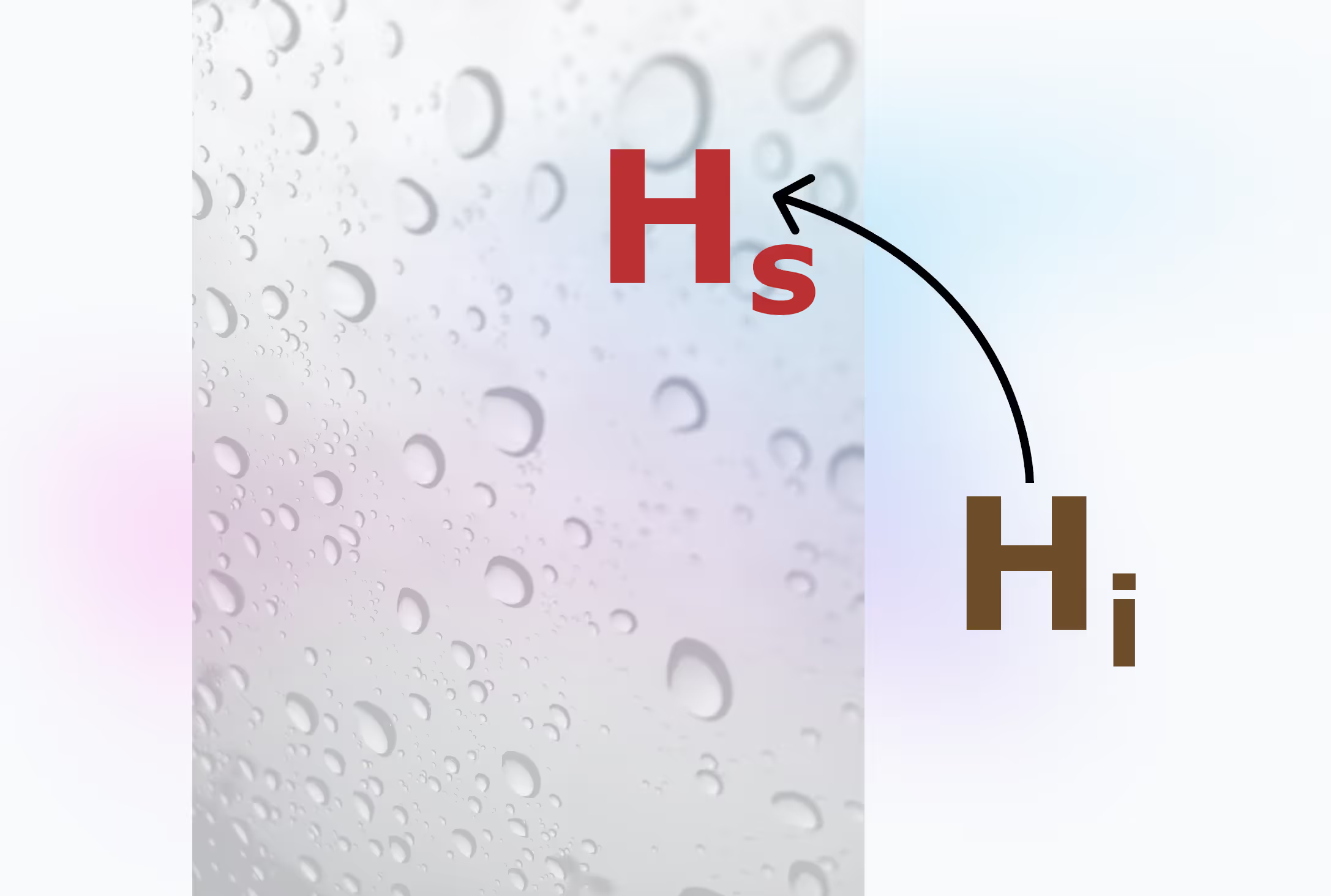
The lower heating value (Hi) indicates how much usable heat energy is released from a fuel without including the condensation heat of the water vapour in the flue gas.
So with conventional heating, the water vapour is lost unused through the chimney. The lower heating value therefore only reflects the “dry” part of combustion.
When does the lower heating value matter?
The lower heating value is often used for older heating systems, especially standard boilers without condensing technology. For consumption-based certificates based on heat meter readings, e.g. in contracting, calculations are generally based on lower heating value. Reason: heat meters measure only the heat actually used, not the theoretically possible total potential of a fuel.
Typical energy carriers and lower heating value
- Heating oil
- Natural gas (used conventionally)
- Coal
- Wood/pellets without condensing technology
The significance of the higher heating value
The higher heating value (Hs) describes the total energy contained in the fuel, including the heat released when the water vapour in the flue gas condenses. This extra heat can only be used with modern condensing technology, where the flue gas is cooled enough for the vapour to condense and the condensation heat to be recovered.
Why is the higher heating value greater than the lower heating value?
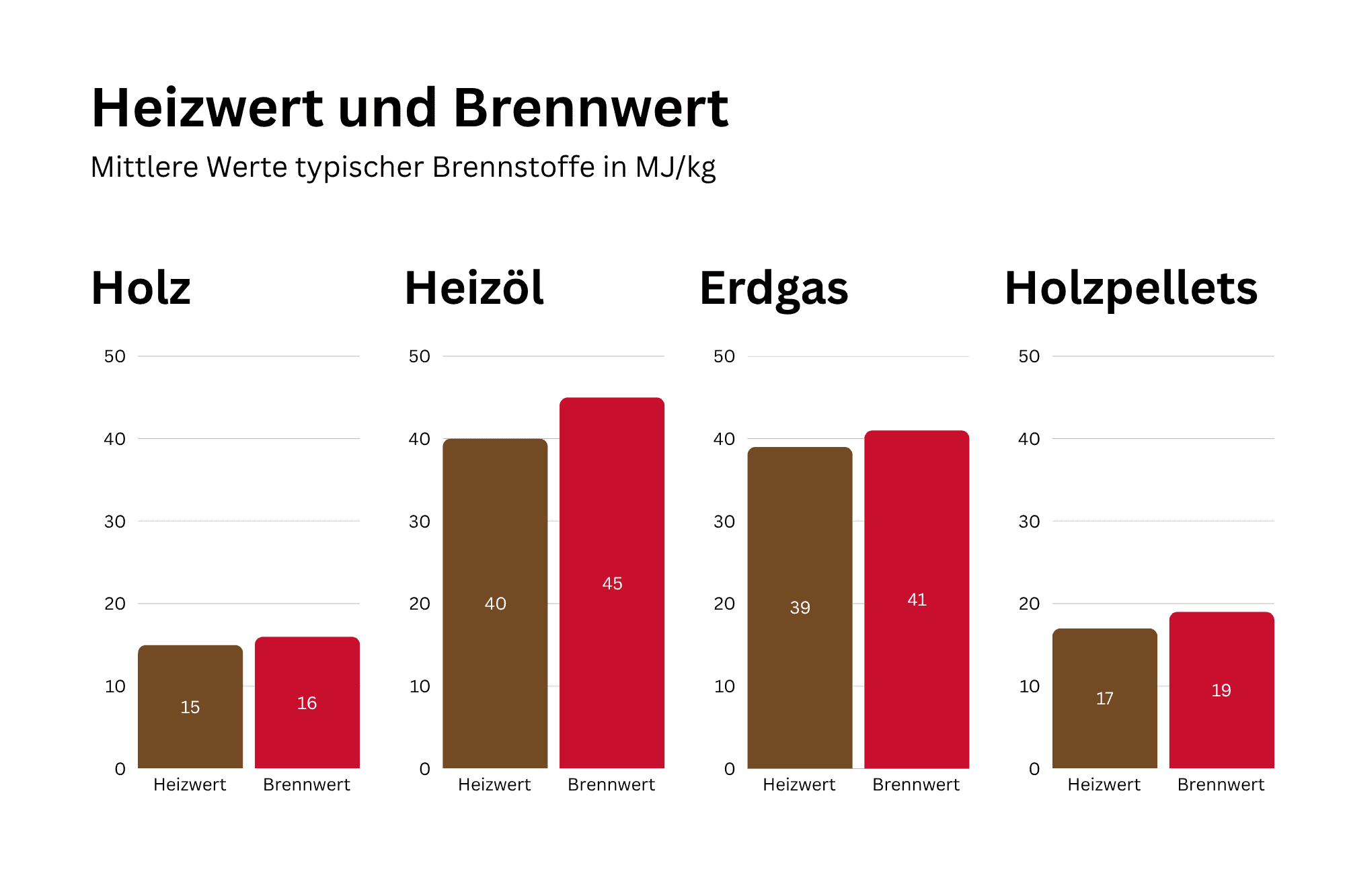
Because the higher heating value includes not only the combustion heat but also the latent heat from condensation of the water vapour. Depending on the fuel, the difference can be 5 to 11%. For natural gas the higher heating value is typically about 10% above the lower heating value, for heating oil about 6%.
For which energy carriers is the higher heating value relevant?
- Natural gas (with condensing technology)
- Heating oil (with condensing technology)
- Wood pellets (when combined with condensing technology)
The role of both values in the consumption-based certificate
In the consumption-based energy certificate, the actual energy consumption of the last three years is evaluated exactly as stated by the energy supplier on the heating bill. What matters is whether consumption was measured and billed on the basis of lower heating value (Hi) or higher heating value (Hs). That choice affects the calculated efficiency class.
Different effects in the energy certificate
If a supplier bills on the basis of higher heating value, the energy consumption appears higher even though heating output is the same. That can lead to a worse efficiency class in the consumption-based certificate. If lower heating value is used, the calculated consumption is lower, which improves the energy figures.
How can you tell whether lower or higher heating value was used for billing?
Check your heating bill: it usually states whether the kilowatt-hours (kWh) were calculated on the basis of “Hi” (lower heating value) or “Hs” (higher heating value). If that is missing, the conversion formula used often gives a clue. For natural gas, the conversion factor for lower heating value is typically around 8.5 to 9.5 kWh/m³, for higher heating value rather 9.5 to 11.5 kWh/m³.
Special case: contracting
In contracting, energy is often metered via heat meters, regardless of the energy carrier. These meters record the heat actually supplied and always calculate consumption on the basis of lower heating value. So even if a condensing boiler is used, only the lower heating value appears in the consumption-based certificate, which can result in a better efficiency class.
Why lower and higher heating value matter for the consumption-based certificate but not for the demand-based certificate
The consumption-based certificate uses real energy consumption from past years, i.e. what was actually billed. Whether the supplier uses lower or higher heating value as the basis depends on the supplier; the difference directly affects the figures in the certificate.
For the demand-based certificate, by contrast, energy demand is calculated theoretically, independent of actual consumption or occupants’ heating habits. Standardised calculation methods are used, and they always use the higher heating value. So for the demand-based certificate it does not matter how the energy supplier bills.
Lower heating value, higher heating value and the energy certificate: what really matters
Lower and higher heating value are central concepts in energy efficiency, especially for the consumption-based certificate. While the higher heating value reflects the total energy content of a fuel, the lower heating value reflects a smaller, actually usable amount. This difference clearly affects the consumption data shown in the energy certificate, depending on the measurement method and how the supplier bills.
For owners it is important to know whether the supplier uses lower or higher heating value, because that can affect the efficiency class in the consumption-based certificate and thus the marketing potential of the property. For the demand-based certificate these values do not matter, as standardised parameters are used there.
The topic is especially relevant for fossil fuels such as gas or heating oil. The difference also matters for biomass such as wood pellets. If you use electricity, district heating or ambient energy, you usually do not need to worry about lower and higher heating value.
Our tip: Clarify with your energy supplier how consumption is billed, and use our expertise to obtain a legally compliant and verifiable energy certificate.
For the documents typically required, see: Documents for the energy certificate: what do I need?.