The meaning of the U-value in building energy assessment

The U-value is central to the energy assessment of buildings, especially in the demand-based certificate, where building quality is calculated independently of user behaviour.
What you need to know
While consumption-based certificates rely only on actual energy use, the demand-based certificate uses technically determined U-values to show how well a wall, roof or window insulates.
That lowers long-term operating costs, improves the efficiency class and affects legal categories and eligibility for funding under the Building Energy Act (GEG). For refurbishment or new build, the U-value is not just a technical figure but an important tool for cost and climate.
Physical basics
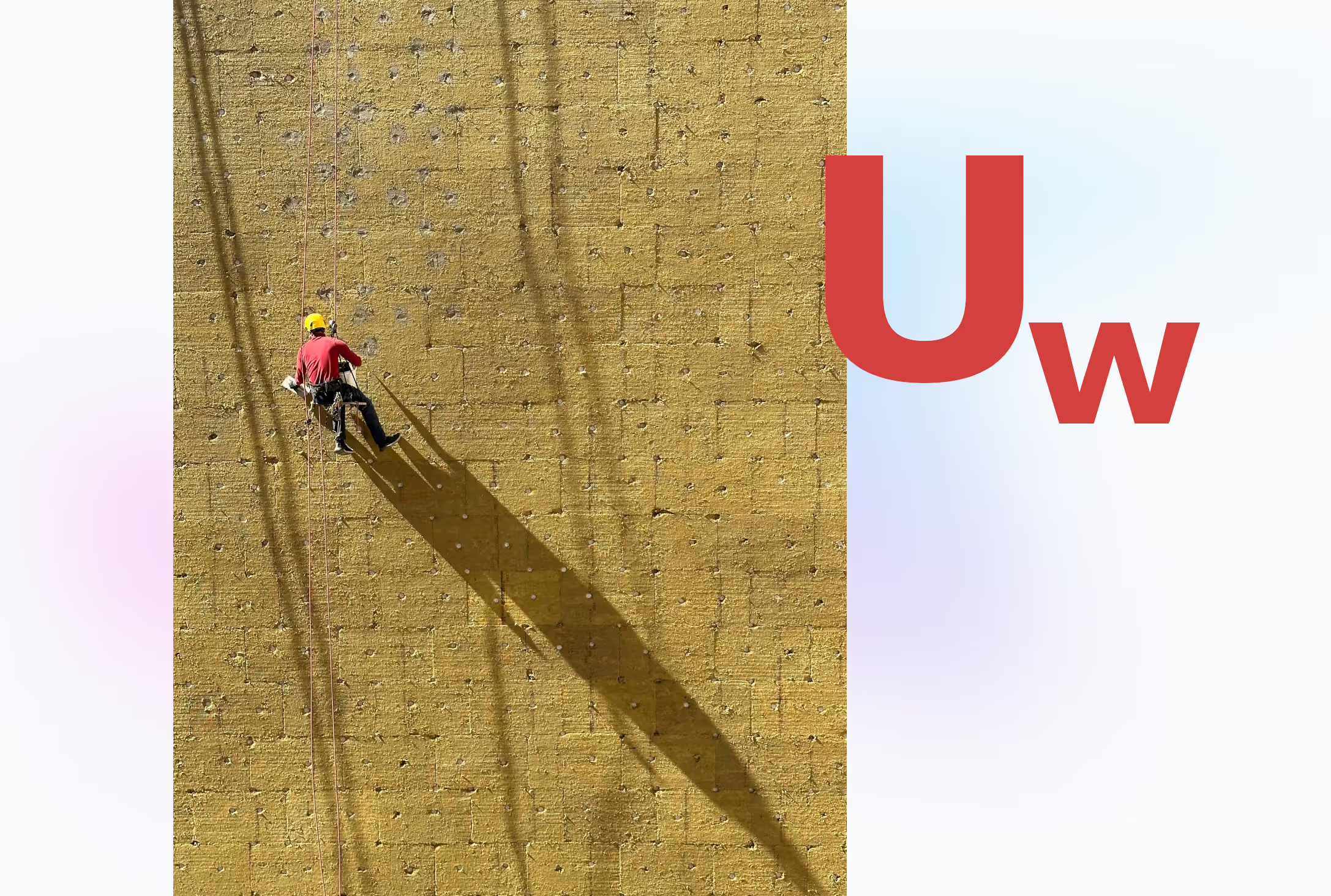
The U-value — correctly "thermal transmittance" — describes how much heat is lost through a building element to the outside, in W/m²K. So it states how many watts of heat pass through one square metre when there is a one kelvin (1 °C) difference between inside and outside.
Example: an uninsulated 1960s brick wall often has a U-value of about 1.4 W/m²K. Modern thermal bricks can achieve around 0.2 W/m²K or better. The lower the U-value, the better the insulation and the lower the energy loss. The U-value feeds directly into transmission heat loss, a key part of the building’s energy balance.
What is transmission heat loss?
Transmission heat loss is the heat a building loses through its envelope (walls, windows, roof, floor) when heated. The loss is determined by the sum of all U-values and their areas. Unlike ventilation heat loss, transmission loss is due to the building fabric and can be reduced with better insulation and modern materials — and thus directly improves the energy certificate and heating costs.
How is the U-value determined?
The U-value follows from the materials, their thermal conductivity and layer thicknesses. The more layers and the better the insulation, the lower the U-value. For a multi-layer wall, each layer has a thermal resistance R (thickness / conductivity); the total R gives U = 1 / R (plus standard inside/outside resistances). Windows consider both frame and glazing. A poor or old window can significantly worsen the certificate even if walls and roof are well insulated. The GEG sets maximum U-values for new builds and refurbishment, e.g. 0.24 W/m²K for external walls.
Typical U-values by component
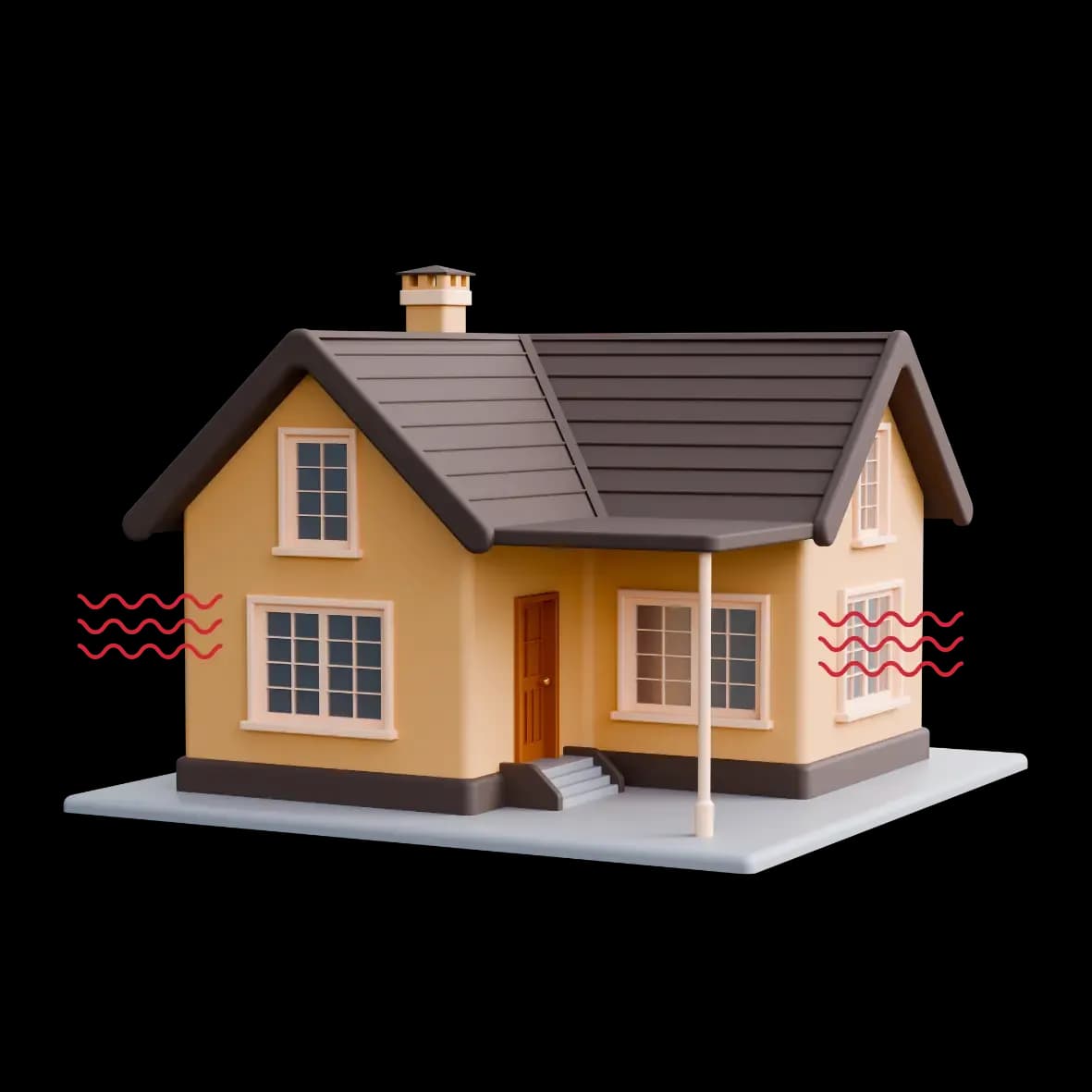
Wall
Old walls without insulation often > 1.0 W/m²K; refurbished external wall ≤ 0.25 W/m²K
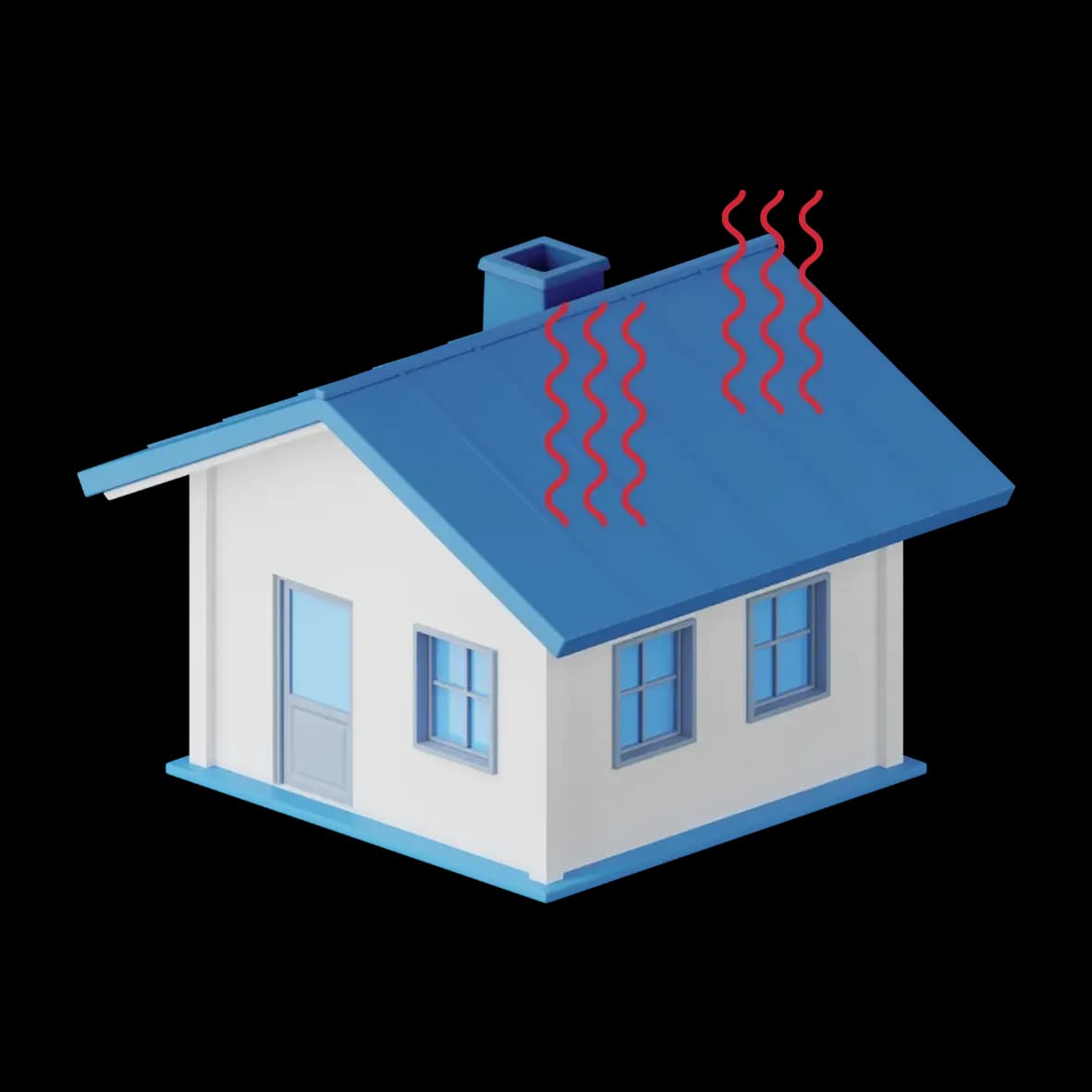
Roof
Uninsulated roofs often 1.5–2.0 W/m²K; new builds ≤ 0.15 W/m²K
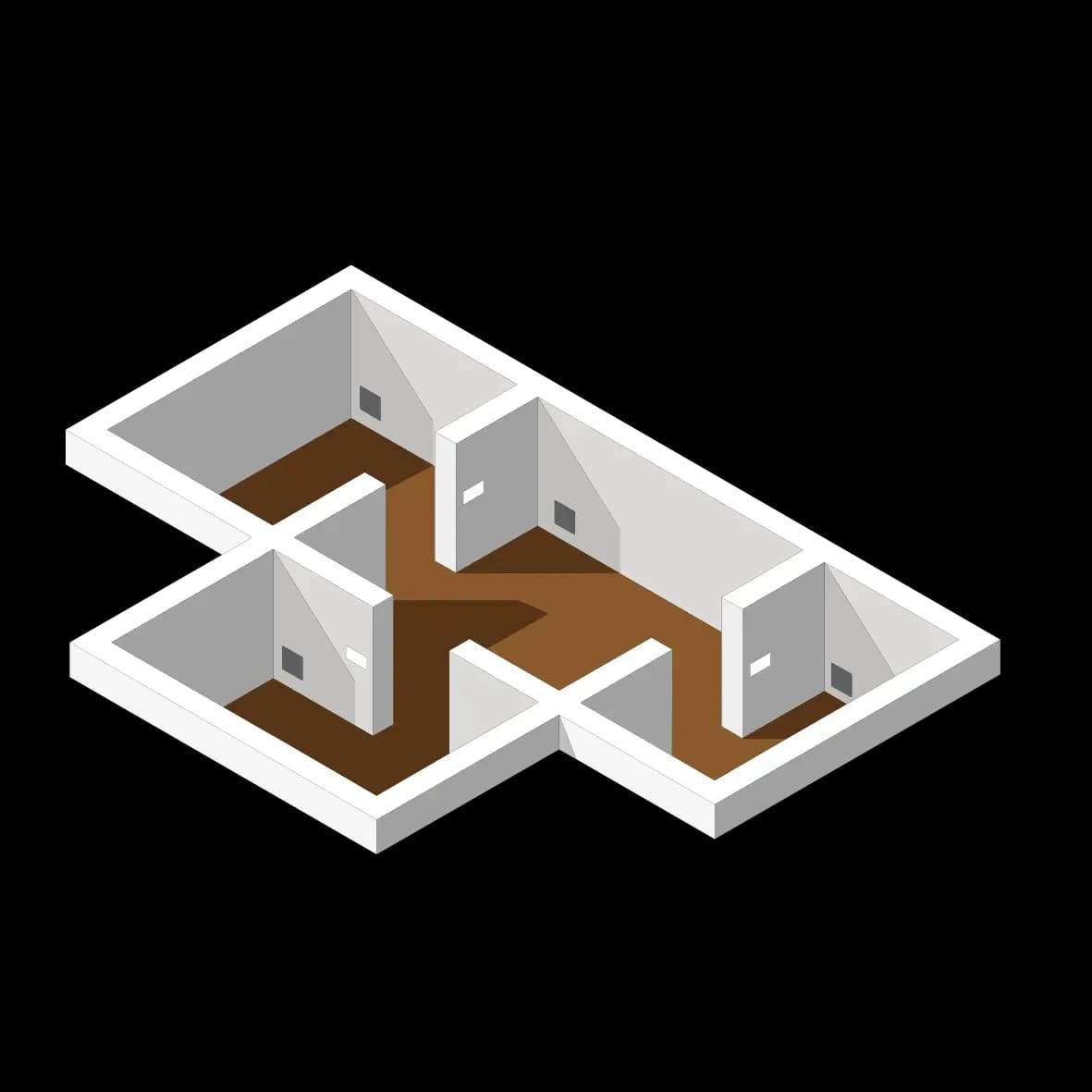
Floor slab, basement ceiling
Floor slab or basement ceilings also depend strongly on insulation; modern ≤ 0.3 W/m²K
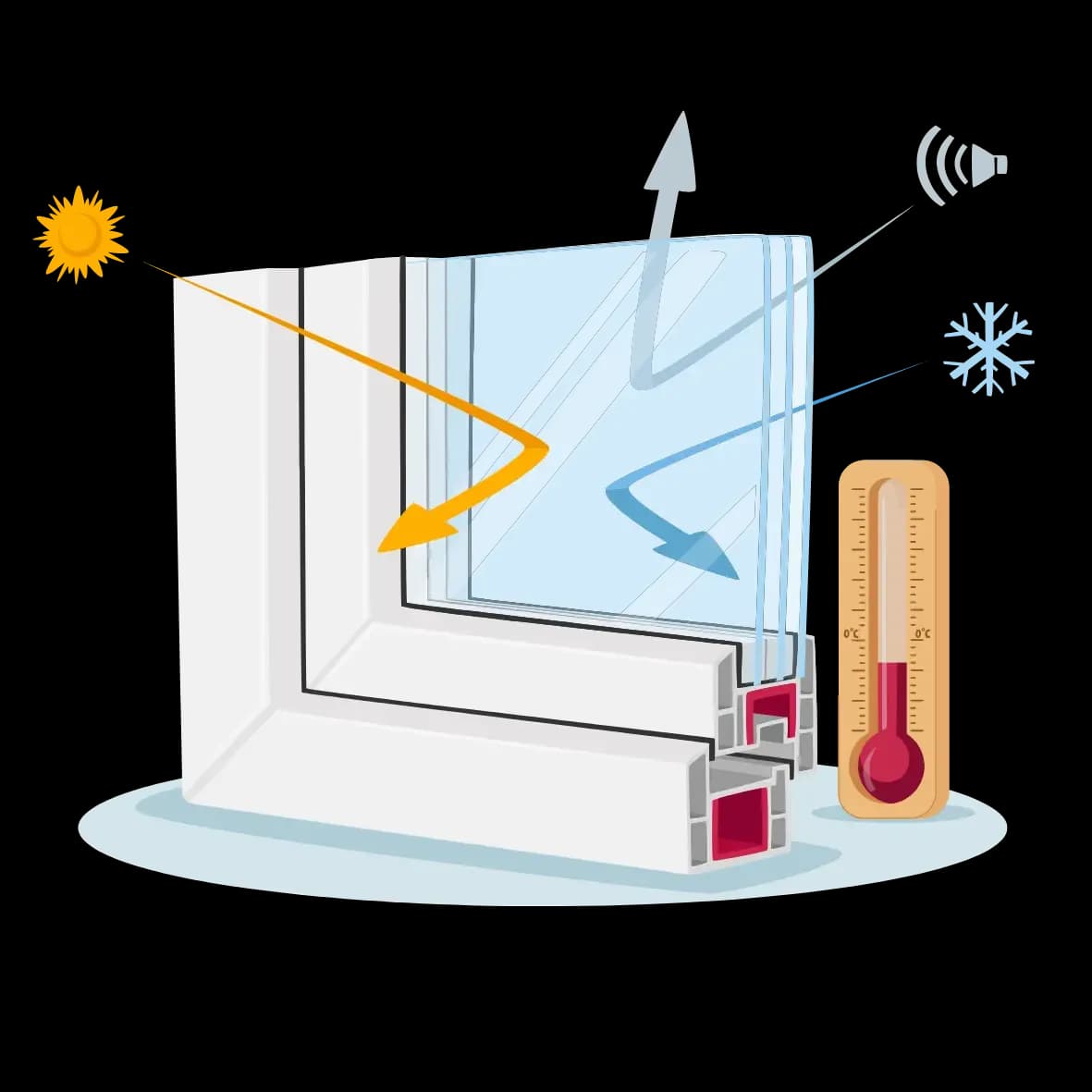
Windows
Single glazing > 5.0 W/m²K; modern triple glazing with good frame ≤ 0.8 W/m²K
U-values in the energy certificate: when no concrete values are available
In the demand-based certificate, U-values feed directly into the calculated energy demand. When exact U-values are unknown for older buildings, consultants use reference or default values from the GEG, based on typical constructions by year and type.
Example standard values
| Component | Typical U-values (old) | Typical U-values (new) |
|---|---|---|
| External wall (brick, uninsulated) | approx. 1.2 – 1.4 W/m²K | ≤ 0.20 W/m²K (insulated) |
| Roof (uninsulated) | approx. 1.8 W/m²K | ≤ 0.15 W/m²K |
| Windows (single glazing) | approx. 5.0 W/m²K | ≤ 0.90 W/m²K (triple glazing) |
| Basement ceiling (uninsulated) | approx. 1.0 – 1.5 W/m²K | ≤ 0.30 W/m²K |
Defaults are often conservative, so the result can be worse than reality. Providing accurate building documents or details on materials and insulation thickness usually improves the efficiency class and potentially the property value.
U-value and efficiency classes
The U-value directly affects the result of the demand-based certificate and thus the efficiency class. The better (lower) the U-values, the lower the heat loss and the better the rating.
| Component | U-value very good | U-value average | U-value poor |
|---|---|---|---|
| Wall | ≤ 0.20 W/m²K | 0.40–0.60 W/m²K | > 1.00 W/m²K |
| Windows | ≤ 0.80 W/m²K | 1.3–1.7 W/m²K | > 2.5 W/m²K |
| Roof | ≤ 0.15 W/m²K | 0.3–0.5 W/m²K | > 1.00 W/m²K |
Efficiency house 55 (KfW): U-values well below minimum requirements. Standard new build: good U-values. Existing buildings: depend on refurbishment; unrefurbished older buildings often only reach class F to H.
Impact of individual poor U-values on the overall result
Even if most of the envelope has good U-values, one element with much worse insulation can worsen the whole assessment ("bottleneck" principle). Example: modern walls (0.18 W/m²K) and roof (0.20 W/m²K) can still lead to only a moderate class if windows are old (3.0 W/m²K). Tip: Start refurbishment with the weakest elements — windows, uninsulated basement ceilings or old doors often offer the biggest savings. Poor U-values can also exclude you from KfW funding (e.g. external wall worse than 0.24 W/m²K).
Tips when commissioning a demand-based certificate
Provide any known U-values; the more accurate the data, the more realistic and often better the result. U-values can be found in building descriptions, reports from architects or consultants, old invoices (windows, insulation) or refurbishment records. If no U-values are known, give precise layer details: which materials and what thickness? Example: "Wall: 24 cm Poroton, 10 cm polystyrene, 2 cm plaster" — the consultant can then calculate the U-value, which is usually more accurate than default tables.
The U-value — small but decisive
The U-value is central to building energy assessment, mainly in the demand-based certificate. It shows how well individual elements are protected against heat loss. The lower the U-value, the better the insulation and the better the efficiency class. When ordering a demand-based certificate, gather all available information on elements and U-values for a more realistic, often more favourable result. For unusual area figures in the certificate, see usable area vs living area. For changes from 2026, see Energy certificate 2026: new A–G scale.
Tip: If unsure, get support from a qualified energy consultant or specialised online provider to derive the right values from your documents.