How a heat pump affects the energy certificate

A modern heat pump can significantly improve a building’s energy performance and thus directly affects the efficiency class on the energy certificate.
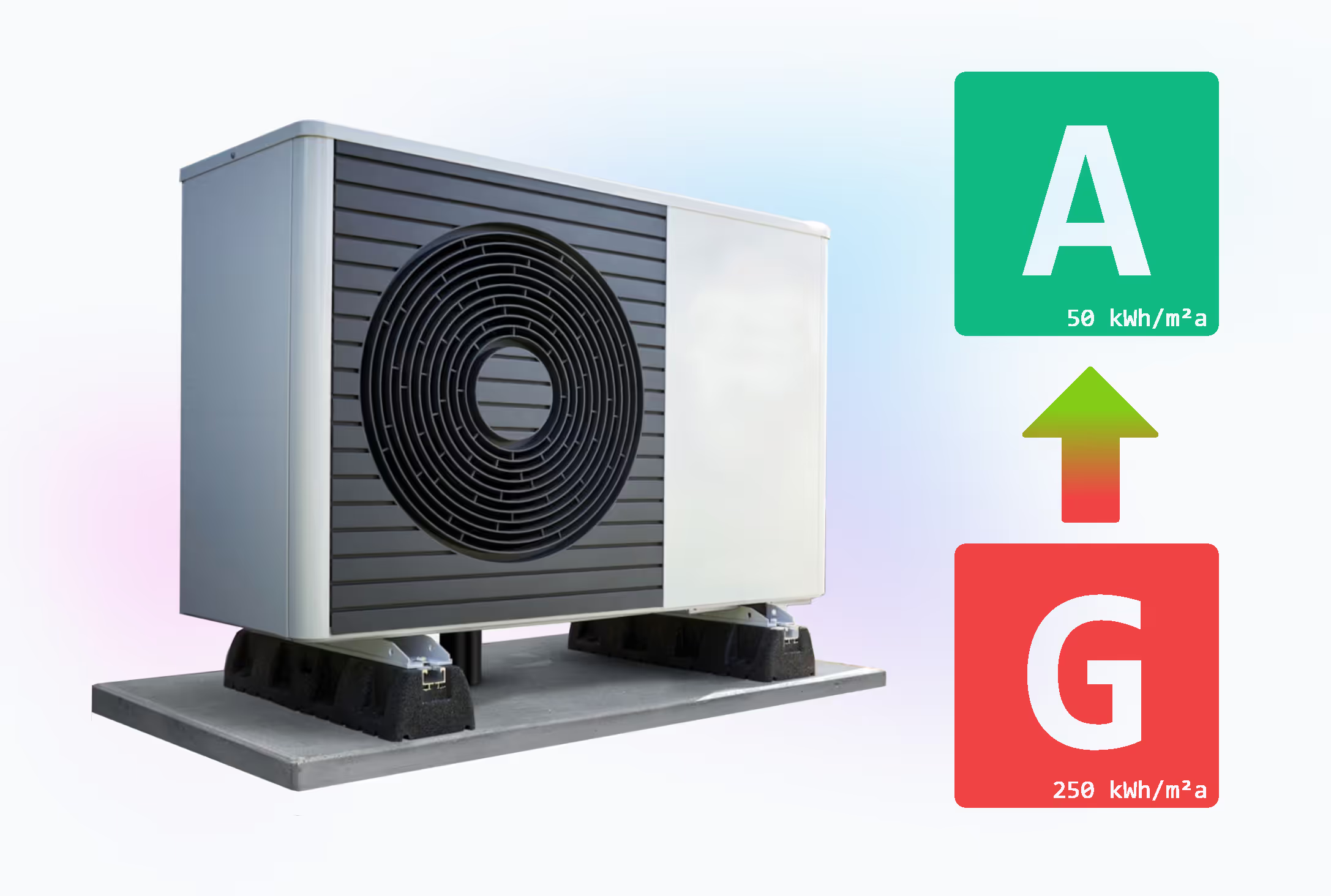
But how exactly does the rating change? What technical and legal aspects matter? And what should you consider when planning, retrofitting or selling?
What you need to know
Energy certificate – meaning and use
The energy certificate rates a building’s energy quality and is legally required on sale, new letting or major refurbishment. It contains key figures such as final energy demand or consumption, primary energy demand and the efficiency class from A+ to H. These help buyers, tenants and lenders and create transparency over expected energy costs. The choice of heating system, especially the energy source, strongly affects the values on the certificate. Systems using renewables perform significantly better.
Heat pumps – types and energy efficiency
Heat pumps use ambient energy from air, ground or water to heat buildings efficiently. They need little electricity to produce much more heat. Air-source: extract heat from outside air; relatively easy to install; efficiency depends on outside temperature. Ground-source: use constant ground temperature; high annual performance; very positive effect on the certificate; often needed for A+ in new builds. Water-source: use groundwater; highest efficiency; permits required; best rating possible. COP and SCOP: efficiency is given by COP for a specific point and by the annual factor (SCOP/JAZ). Both feed into the certificate; a high value or factor over 4 improves primary energy and the class.
How heat pumps affect the energy certificate
Installing a heat pump improves the building’s overall energy balance and is reflected in the certificate. Key figures: efficiency class, final energy demand, primary energy. In an unrefurbished building, replacing old gas heating with a modern air-source heat pump can improve the class from G to B or even A, especially with insulation or new windows. According to the German heat pump association, only with a heat pump can a new build achieve class A or in some cases A+.
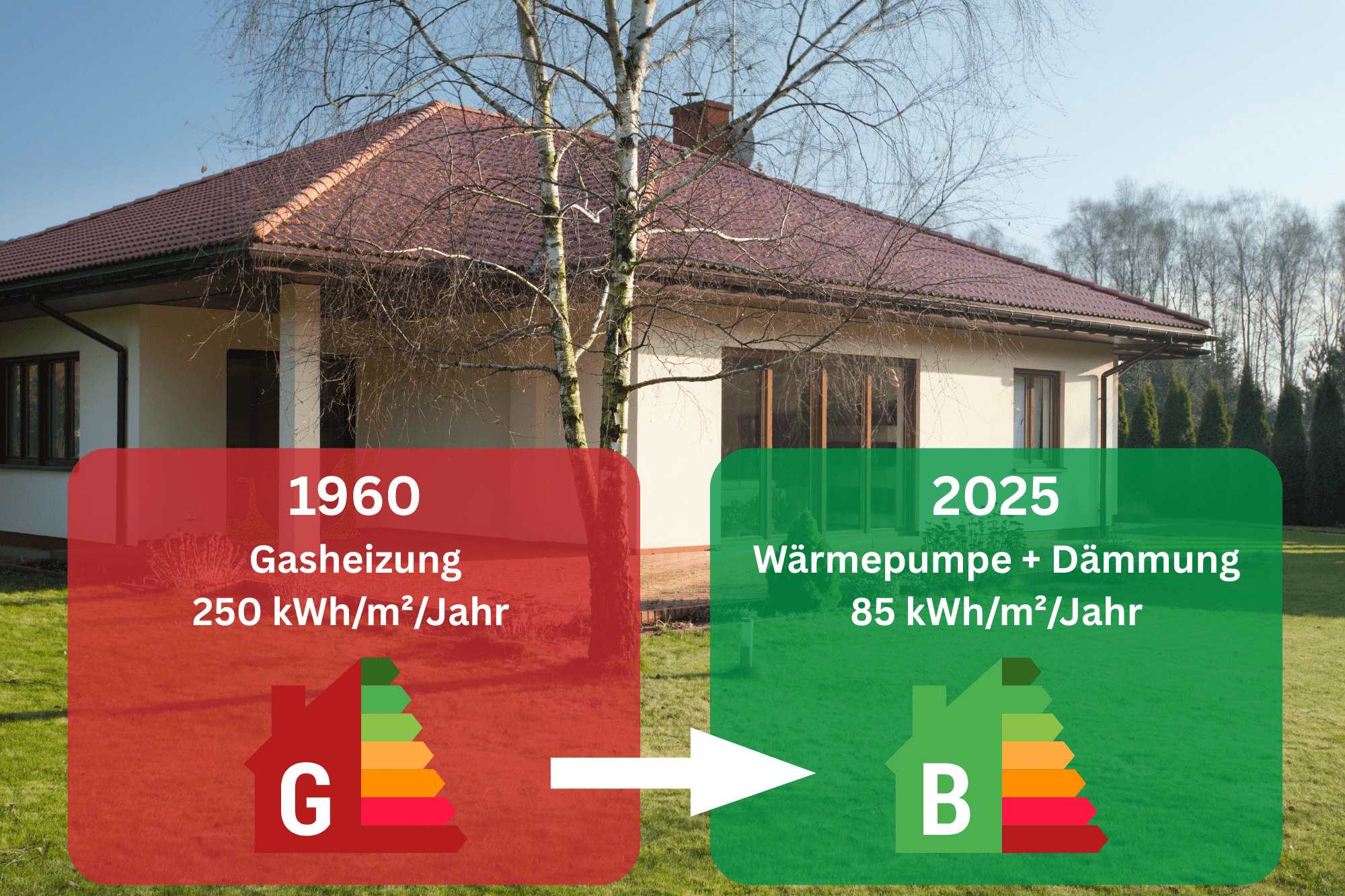
Heat pumps use electricity but harness free ambient heat, reducing final and especially primary energy. The GEG assessment focuses on primary energy, where heat pumps perform well. A better certificate opens up funding; classes A–C often qualify for low-interest loans (e.g. KfW). Good energy values also affect price: many sellers with poor values accept discounts; good values often achieve higher prices. Properties with good efficiency sell or let faster and at better prices.
Heat pump and energy certificate: realistic expectations
A heat pump can significantly improve efficiency and the figures on the certificate — meaning lower energy costs and better sale or letting prospects. An unrefurbished building does not automatically reach A+ with only a heat pump; additional measures (insulation, windows, ventilation) are needed. Hybrid solutions (heat pump plus PV or gas) can also help — see Photovoltaics and the energy certificate: when solar improves the efficiency class — and when it doesn't. Get advice early and order a legally valid energy certificate when needed.