Reading Your Heating Bill: Consumption Data for the Energy Certificate

For the consumption certificate, three years of heating cost statements are often enough — the question is where to find the values on the bill that you need for data entry. This guide shows typical line items, maps them to the online form and explains three years of consumption data, the hot-water share and kilowatt-hours in practice.
Certificate check
In diesem Artikel erfahren Sie …
From the heating bill to the online form
The documents overview lists what to gather; for the consumption certificate, three years of statements are the core. The order form asks for kWh, periods per carrier and hot water — not the euro total on the service charge bill. Reading the statement methodically once usually means one clean pass through the form and fewer follow-ups from the issuer.
Which documents count for consumption data
- Multi-family: heating cost statement under HKVO from the manager
- Single-family: supplier bill or fuel invoices
- District heat: network operator bill with consumption and primary energy factor
- Pellets/oil without HKVO: delivery notes with quantity and period
- Heat pump: electricity bill for heat pump power — not the normal household tariff
Without a formal statement, traceable energy quantities still count — the issuer must plausibility-check under § 88 GEG.
Periods: 3 years and the 18-month rule
For the consumption certificate you need three years of gap-free consumption data — legally 36 consecutive months under § 82 GEG. The latest statement must be no more than 18 months old.
Instead of 36 months, annual consumption over two years will apply — still with the 18-month cap. See consumption certificate & GModG and order now?
Gaps or old statements often push the certificate check toward a demand certificate.
Read the statement line by line
Space heat: lines such as “heating consumption” or energy in kWh.
Hot water: separate kWh, dedicated meter or flat share — answer “measured separately?” in the form.
Gas in m³: often requires kWh → calorific vs. gross calorific value.
Heat pump (electricity): use heating kWh — see the heat pump / heat meter row in the table below, not the
household electricity bill.
Second heater: capture each carrier with its own period — see consumption data logic.
Table: bill line and form field
| On the statement / bill | For the consumption certificate | Note |
|---|---|---|
| Billing period (from–to) | Period per energy carrier | Three consecutive billing years |
| Space heat consumption (kWh) | Heating energy / end energy heat | Not the euro total |
| Hot water kWh or “WW flat rate” | Hot water separate or estimated | Form asks “measured separately?” |
| Gas in m³ | Convert to kWh (calorific value) | See calorific vs. gross calorific value |
| Oil/pellet delivery volume | Consumption per fuel | Tank invoice instead of HKVO statement |
| District heat consumption | kWh + primary energy factor | Factor often on supplier bill |
| kWh on heat pump / heat meter (tariff e.g. heat pump power, heating current, WP, thermo) | Heating energy / end energy electricity | Not household supply; with HT/NT use annual kWh total |
| Vacancy / unused area | Vacancy periods and areas | Normalisation in the form |
The table does not replace legal advice on heating cost billing — it only supports data entry for the certificate.
Vacancy, gaps and a second heater
Vacancy: note months and area without use; many portals normalise consumption accordingly.
A two-month gap: check for missing proof or switch to demand certificate.
Mixed use: consumption certificate only if § 82 applies — clarify early via the certificate check.
How to enter the data
- Sort three billing years and compare periods.
- Check 3 years + 18-month cap.
- Split heat and hot water.
- Align units (m³ → kWh).
- Enter vacancy if relevant.
- Order consumption certificate — or choose demand path if data is incomplete.
Full checklist: documents for the energy certificate.
Frequently asked questions
Is one statement enough?
No — you need three years, usually three billing periods (legally 36 months). The latest statement must be no more than 18 months old.
Can I enter euro amounts?
No. Use energy quantities (kWh or converted volumes), not cost lines.
Heat pump: use household electricity?
No. Use heating kWh on the heat pump or heat meter (tariff e.g. heat pump power, heating current, WP, thermo) — not your household electricity bill.
Gas in cubic metres?
Convert to kWh and check calorific value rules on the bill.
Tenant without own meter?
You need figures from the landlord or manager.
Change from 2027?
For purely residential buildings: two annual periods instead of 36 months — until then the old rule applies.
Summary
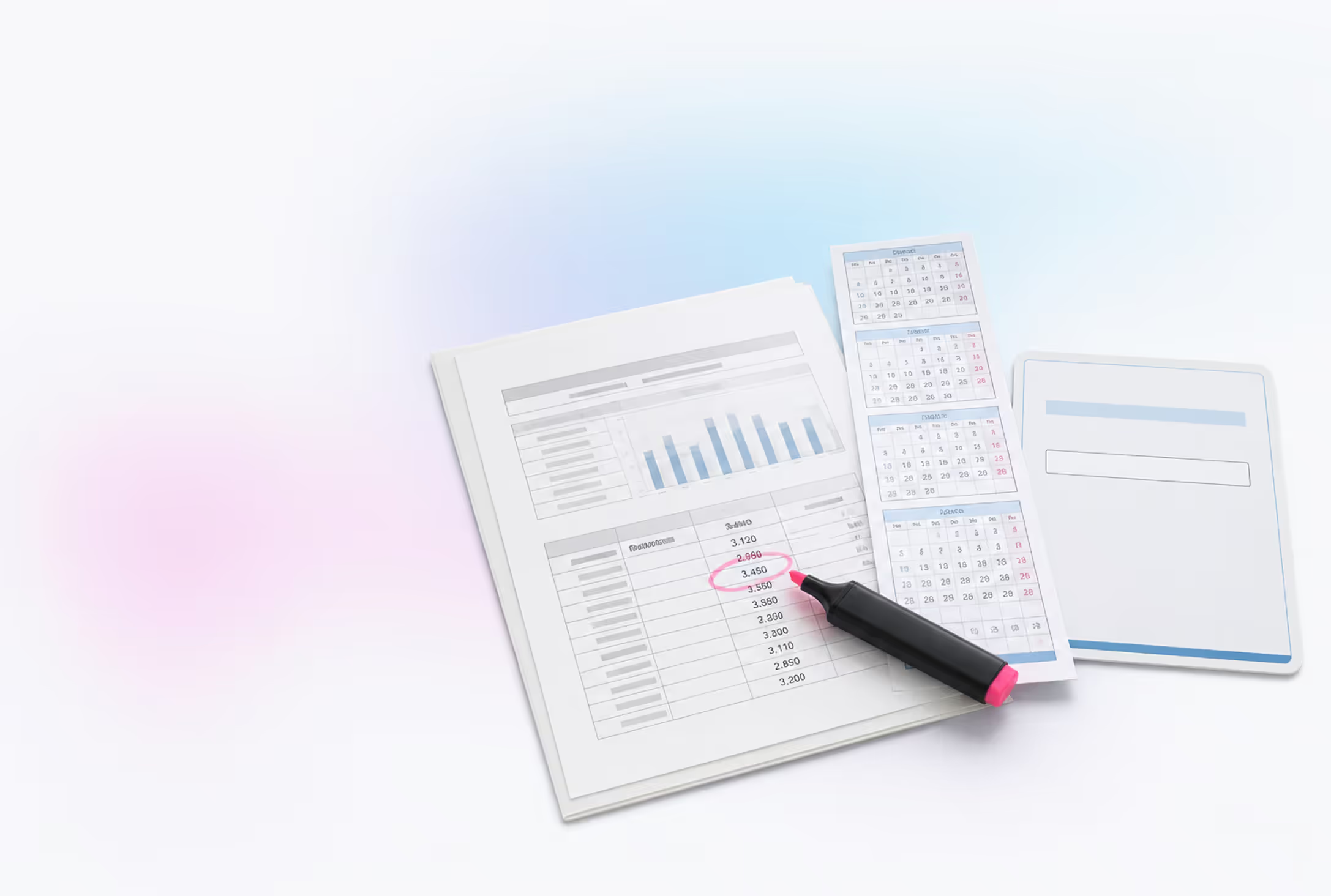
A consumption certificate looks intimidating on paper — in practice the work is mostly sorting paperwork once: lay out three billing years, highlight periods and kWh (space heat, hot water, heat pump electricity if needed), align units. That is work you can do at your kitchen table, without an on-site energy consultant.
A few rules from this guide matter most: use energy quantities, not euro lines; keep space heat and hot water separate; for heat pumps, read the heat meter, convert m³ to kWh where needed, and check three gap-free years plus the 18-month freshness rule before you order. The bill → form table helps line-by-line — it shows quickly whether you need a demand certificate or can stay on the consumption path.
Once the figures add up, the next step is often straight online data entry. An online consumption certificate lets you keep control of your documents, sanity-check periods yourself, and have a § 88 issuer produce the official PDF — legally equivalent to an on-site visit. Owners who read their statements once avoid chasing figures later and cut follow-up delays. Compared with on-site packages — chimney sweep, consultant visits, bundled services — several hundred euros often remain in your pocket when consumption data are already in order and you order online.
Next: Certificate check · Documents checklist · Order consumption certificate · Consumption providers 2026