Can You Create an Energy Certificate Yourself? What’s Allowed — and What Isn’t (GEG §88)

The sale is approaching, the agent asks for the energy certificate — and you quickly run into terms like “Excel template” or “free PDF”. Wanting to save money is understandable. What matters is: May you issue the certificate, or do you only supply the data on which an authorised person creates it?
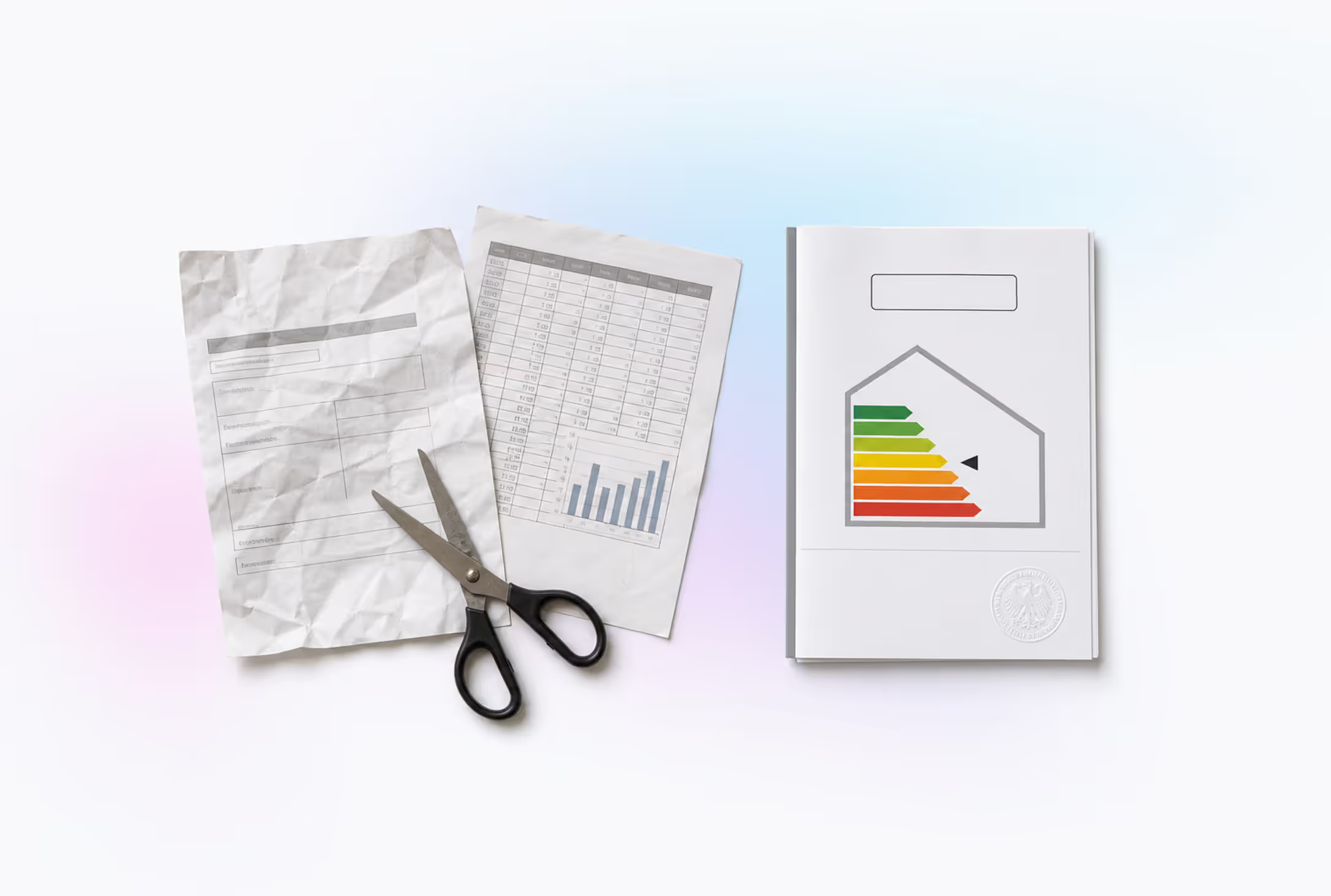
Issuance is reserved for authorised persons under § 88 GEG — not you as owner. What you can very well do yourself: sort heating bills, plausibilise consumption, upload documents and then commission the certificate online. That is the legal and often cheaper route.
And: good preparation does not only save costs — it often also improves the accuracy of the results, because unknown values otherwise have to be estimated conservatively. This helps you avoid mistakes, back-and-forth, and in the worst case fines triggered by implausible or incorrect data.
In this article you will learn …
- … whether you may issue an energy certificate yourself
- … who may issue under GEG § 88
- … why Excel and templates do not replace a valid certificate
- … what you as owner may handle yourself
- … why ordering online is legal — but not “creating it yourself”
- … risks of an invalid certificate
- … answers to the key questions
- … our conclusion
The short answer: No — but you can do much yourself
A legally valid energy certificate does not come from filling in a template. It requires issuance by an authorised person and registration with the German Institute for Building Technology (DIBt) under § 98 GEG. The boundary at a glance:
| Task | You | Authorised issuers only |
|---|---|---|
| Collect heating bills | ✓ | |
| Record building data (year built, area, heating) | ✓ | |
| Rough Excel consumption check | ✓ | |
| Standard-compliant calculation & certificate PDF | ✓ | |
| Apply for DIBt registration number | ✓ | |
| Present certificate at viewing (§ 80 GEG) | with a valid certificate | issuance |
When you need a certificate and which deadlines apply is explained in the guide to energy certificate duties. If you have inherited a property, some duties differ — see Energy certificate for inherited property. This article answers only: May I do this myself?
Preparation is not issuance
Search results and provider copy often mix three things:
- “Calculate yourself” — you work out figures for your own orientation.
- “Online form” — you supply data; another person issues the certificate.
- “Issue yourself” — you hand over a document as the official energy certificate.
Legally, issuance and DIBt registration count. Whether you calculated in Excel beforehand is irrelevant.
- With online ordering, you enter data; an authorised energy consultant checks, calculates to standard and registers — you are not the issuer.
- An Excel template may give kWh per square metre but replaces neither GEG-compliant calculation nor DIBt registration.
- A free PDF from the web does not meet template and handover duties. On supposedly free certificates: Energy certificate for free?.
Who may issue energy certificates? (GEG § 88)
§ 88 GEG defines exhaustively who may issue. Typically not authorised are owners without the right qualification, estate agents, property managers or pure software providers — even when the interface says “create yourself”.
| Group | Brief |
|---|---|
| Persons authorised under state building law for thermal proofs | within that scope |
| University graduates (e.g. architecture, civil engineering, physics, building services) | plus additional requirement under para. 2 |
| Master craftsmen / registration-eligible trades | plus additional requirement under para. 2 |
| State-recognised technicians (envelope, heating, ventilation) | plus additional requirement under para. 2 |
There is also an additional requirement under § 88 para. 2 GEG: degree focus on energy-efficient building, at least two years of experience in building construction, training under Annex 11 GEG or public appointment as an expert. Since the 2024 GEG reform, the BAFA energy consultancy qualification exam also qualifies (§ 88 para. 5 GEG).
There is no official issuer licence. The issuer checks whether they meet the requirements — as the BBSR info portal on authorised issuers explains. Lists such as dena energy efficiency experts help you search; they are not legal advice.
Calculate an energy certificate yourself? Excel, templates and PDFs
You have summed 36 months of heating costs for 120 m² — 18,000 kWh per year, roughly 150 kWh/(m²·a). Such spreadsheets are a useful plausibility check before commissioning (WHK Controlling).
The result is still not an energy certificate. Weather adjustment under § 82 GEG, mandatory fields under GEG annexes and the DIBt registration number are missing. A self-printed PDF may look convincing in a folder — at viewings or before the notary it does not count.
What separates consumption and demand certificates is in the guide to understanding energy certificates. The authorised person chooses the right type from your data — not your Excel file.
DIBt registration number: Why you cannot “print” it yourself
Without a registration number, no certificate is valid — buyers and tenants rightly check page one. The number is issued only by the DIBt GEG registration office (§ 98 GEG). Access is for authorised persons with an account, not owners.
DIBt does not actively verify authorisation at registration; responsibility lies with the issuer. For you: if there is no number on page 1, the document has no effect. Structure and meaning of the number: The registration number on energy certificates.
What you may do yourself (the 80-percent model)
Here is your legal scope — and often the biggest saving, because the issuer has less to chase:
Checklist: What you can prepare yourself
The full checklist: Documents for the energy certificate. Provide correct data to the issuer — you are liable under § 83 para. 3 GEG. Wrong figures can trigger fines.
Ordering online is not issuing it yourself
With reputable providers you choose the certificate type, enter building and consumption data and upload evidence. An authorised energy consultant checks plausibility, calculates to the technical rules, registers with DIBt and delivers the PDF — legally equivalent to an on-site visit.
“Online” describes the data path, not bypassing § 88. Consumption certificates are often available online from around €49; overviews: 10 online providers compared and 3 top providers. If consumption vs demand is unclear, Energyausweis Smart™ compares both routes and issues the more suitable one — more in the Smart article.
Risks of an invalid or self-made certificate
Anyone who shows up at a viewing with an unregistered PDF does not meet duties on sale or letting — regardless of layout. Fine offences relevant to owners under § 108 GEG:
| Offence | Provision | Up to |
|---|---|---|
| Wrong data from owner | § 83 para. 3 → no. 26 | €10,000 |
| Certificate not presented | § 80 para. 4 → no. 24 | €10,000 |
| Certificate not handed over | § 80 para. 4 → no. 25 | €10,000 |
Issuing without authorisation violates no. 28 (also up to €10,000) — in practice rare for laypeople as long as nobody passes off the document as an official certificate. In everyday experience, civil disputes with buyers or tenants are more common than administrative fines (geg-info.de; cf. liability for invalid certificates).
How to get an energy certificate legally
Frequently asked questions
Can I create an energy certificate myself?
You may not issue it — that is governed by § 88 GEG. You may however prepare it: collect bills, record building data, submit everything to the issuer.
Is an Excel template or free PDF enough?
Not for the legal duty when selling or renting. Yes for your own orientation. Free templates from the web are often a cost trap, not a legal basis.
Is an online EPC valid — or “DIY”?
It is valid if an authorised person issues it and a DIBt registration number appears on the document — not because you filled in the form. On the process: Energy certificate duties — online FAQ.
Who may issue energy certificates?
Qualified professionals under § 88 GEG (see table above) — not you as owner without that qualification.
Can I apply for the DIBt registration number myself?
No. The issuer applies via the GEG registration office.
What if I use an invalid or self-built certificate?
Duties under § 80 GEG remain unmet. Buyers or tenants can complain; fines are possible.
Conclusion
You may not issue an energy certificate yourself — you very much may prepare it. That saves time and often money with the issuer. Collect documents, rough-check consumption and commission an authorised person; online, consumption certificates are often available from around €49. Next steps: collect documents, compare providers or create an energy certificate online.