Energy certificate in Hamburg: apply online and save on cost

As everywhere in Germany, you need an energy certificate in Hamburg when selling or letting a property. It is mandatory in Hamburg and must be presented at the viewing. What is specific to the city?
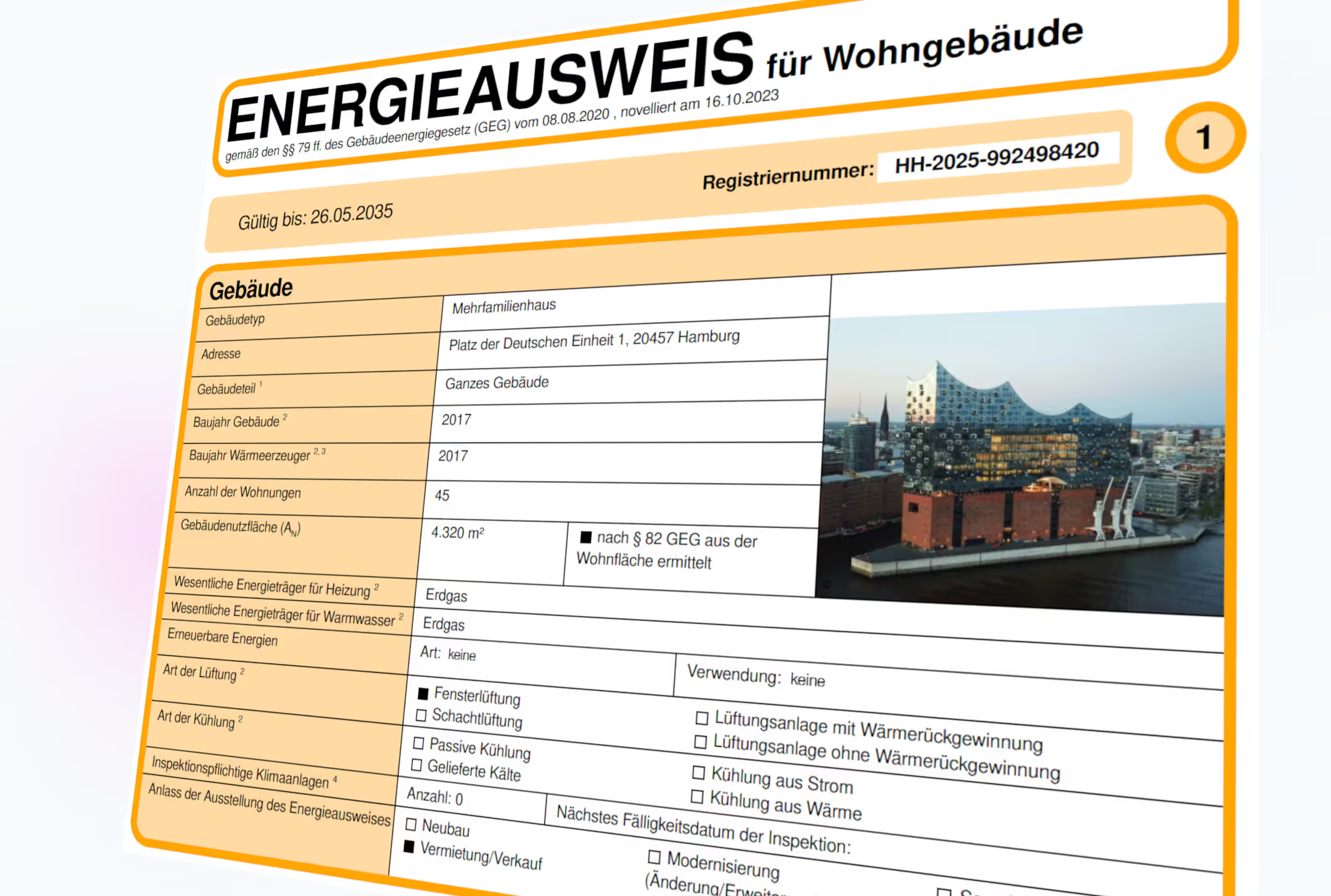
In Hamburg the mix of building ages is reflected in the energy efficiency of the stock. The city combines historic buildings, post-war architecture and modern new builds – each with its own energy profile.
What you need to know
- … how refurbishment status affects energy certificates in Hamburg
- … the latest trends for energy certificates in Hamburg
- … how to get your energy certificate in Hamburg online
- … which energy sources dominate in Hamburg
- … which energy measures are especially worthwhile in Hamburg
- … the opportunities the energy certificate offers in Hamburg
Older buildings in districts such as Eimsbüttel, Ottensen or Winterhude often have low efficiency classes (F to H), as they were built before energy standards. New builds in HafenCity or Barmbek usually meet high standards and achieve classes B to A+.
A building’s age class is a first indication of whether a demand-based certificate (for unrefurbished older buildings) or a consumption-based certificate (for refurbished or larger multi-family buildings) is required. In Hamburg the share of older stock is over 50% in many inner-city areas, which means high demand for refurbishment and meaningful energy certificates.
Refurbishment status and energy certificates in Hamburg
The energy performance of a building largely determines its rating in the energy certificate and thus energy consumption, possible refurbishment measures and ultimately property value.
In Hamburg a large part of the stock is older: over 180,000 residential buildings were built before 1980. Between 1950 and 1979 alone more than 118,000 buildings were built – many without energy standards.
These often have poor efficiency classes (F to H) and significant modernisation potential. Although many refurbishments have been carried out in recent years, there is still a backlog. Especially for buildings from before 1949 – of which there are more than 60,000 in Hamburg – energy consumption is usually above average.
The energy certificate makes deficits transparent – and at the same time provides recommendations for improving energy efficiency.
Energy certificates for residential buildings in Hamburg: figures and trends 2025
Given rising requirements in the building sector, the energy certificate is becoming more important in Hamburg too. Thousands of certificates expire in 2025, mainly those issued under the 2014 Energy Saving Ordinance. Owners are legally required to renew certificates after at most ten years.
In Hamburg an estimated 30,000 to 40,000 energy certificates are newly issued each year – for sale, letting or comprehensive refurbishment. Since the 2024 GEG amendment, new certificates must also state CO₂ emissions per square metre. As a result, many existing buildings now receive lower efficiency classes than before.
This makes the energy certificate a real management tool for owners, buyers and investors. For multi-family buildings the Energyausweis Smart™ is particularly recommended; it uses the better of consumption-based and demand-based values and helps avoid misguided investment in ineffective refurbishment.
Energy certificate in Hamburg online
In Hamburg you can apply for the energy certificate online, simply and in line with legal requirements. For sale or letting this saves time and cost. Via certified online platforms such as energyausweis.de owners receive a valid document within a few working days – prepared by experienced energy consultants and in line with the Building Energy Act (GEG).
Benefits of applying for the energy certificate in Hamburg online
- No on-site visits needed
- Digital data entry in minutes
- Personal review by certified energy consultants
- 10 years validity, recognised across Germany
Energy sources in Hamburg: which dominate the market 2025?
Hamburg is pursuing ambitious climate targets and increasingly relying on sustainable energy. Nevertheless the building stock is mixed.
The most widespread energy source is still gas heating, used in many existing buildings – especially from the 1950s to 1980s. It is increasingly criticised for its high CO₂ emissions.
Current spread of energy sources in Hamburg (2022)
| Energy source | Number of buildings | Spread |
|---|---|---|
| Gas | 70,984 | around 60% market share, especially in stock from 1950–1980 |
| District heating | 47,197 | popular in central districts such as Altona, Barmbek and Eimsbüttel |
| Heating oil | 27,887 | mainly in unrefurbished older buildings outside the centre |
| Solar, geothermal & heat pumps | 6,166 | growing strongly, especially in new builds |
| Electric heating (excluding heat pump) | 4,936 | high running costs, mostly in small units |
| Wood, pellets, biomass, biogas | 2,200 | more in outlying areas and refurbished older buildings |
| Coal | 93 | barely used anymore |
| No heating | 1,199 | e.g. storage units or unused older buildings |
(Source: baulinks.de)
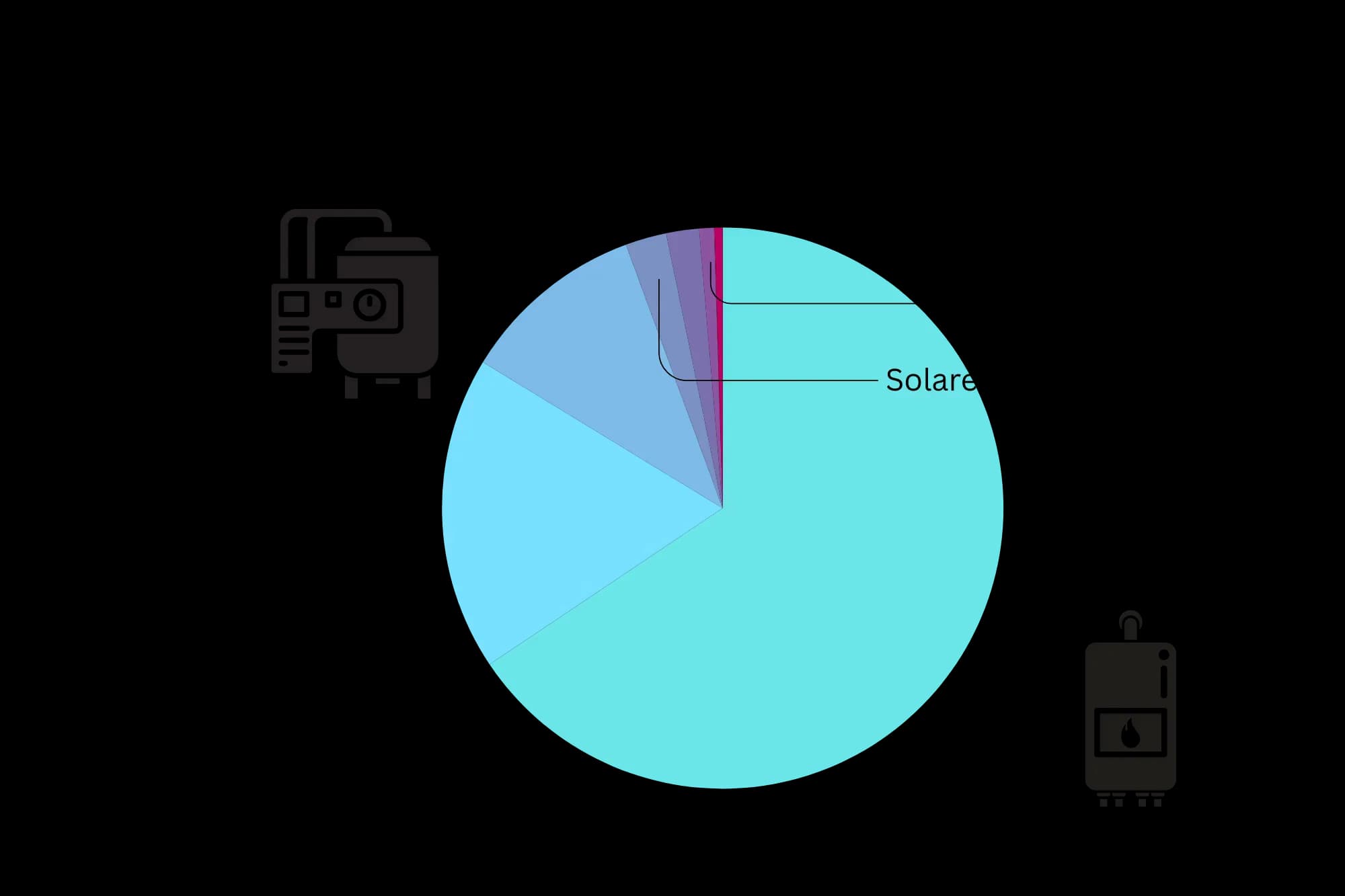
The energy certificate directly reflects the choice of energy source. Buildings with district heating or heat pumps often achieve better efficiency classes (A to C), while gas heating often scores only D or worse – especially without insulation.
Top energy measures for Hamburg properties: maximum efficiency, minimum cost
Owners in Hamburg have many options to reduce their properties’ energy consumption – and thus improve the efficiency class in the energy certificate.
Especially worthwhile are measures with high funding rates and quick payback. The most effective in overview:
Insulating the building envelope
Especially in older buildings, proper insulation of roof, facade and basement ceiling significantly reduces heat loss – a key step to better efficiency classes.
Heating replacement
Switching from old gas or oil heating to heat pumps or modern condensing technology is heavily subsidised and significantly improves the environmental footprint.
Installing PV systems
Photovoltaics also pays off in Hamburg: self-generated electricity reduces energy costs and improves the primary energy balance – a plus in the demand-based certificate.
Digital energy management
Smart controls for heating, ventilation and lighting sustainably reduce consumption and enable precise distribution.
Implementing such measures has a very positive effect on running costs and property value. They are also a prerequisite for many public funding programmes.
Solar energy in Hamburg: potential, sunshine hours and impact on the energy certificate
Despite its northern location, Hamburg has surprisingly high potential for solar energy. With around 1,550 hours of sunshine per year the city is in the middle of the German range.
The sunshine hours are enough to make photovoltaics economically and ecologically worthwhile. More and more owners are recognising the benefits: lower electricity costs, greater independence and a better efficiency class in the energy certificate.
In the energy certificate, using solar energy significantly improves the figures. This applies especially in the demand-based certificate, where the primary energy saved is taken into account. Solar thermal is therefore often listed as a modernisation recommendation in the certificate – a clear indication of long-term savings potential.
Energy certificate in Hamburg: requirement and opportunity
In a city like Hamburg, where older buildings and energetically mixed stock shape the urban landscape, the energy certificate is an important tool to make a property’s energy performance transparent, identify modernisation potential and tap into targeted funding.
Thanks to digital solutions, the energy certificate can be created quickly, easily and in line with legal requirements online – ideal for owners who want to save time and cost. Use the opportunity to have your property assessed – and future-proof it.
Looking for information for other cities? See also: Energy certificate in Berlin: quick and legally compliant online, Energy certificate in Frankfurt: faster online in the Main metropolis and Energy certificate in Munich: order from the online test winner.