Photovoltaics and the Energy Certificate: When Solar Improves the Efficiency Class — and When It Doesn't

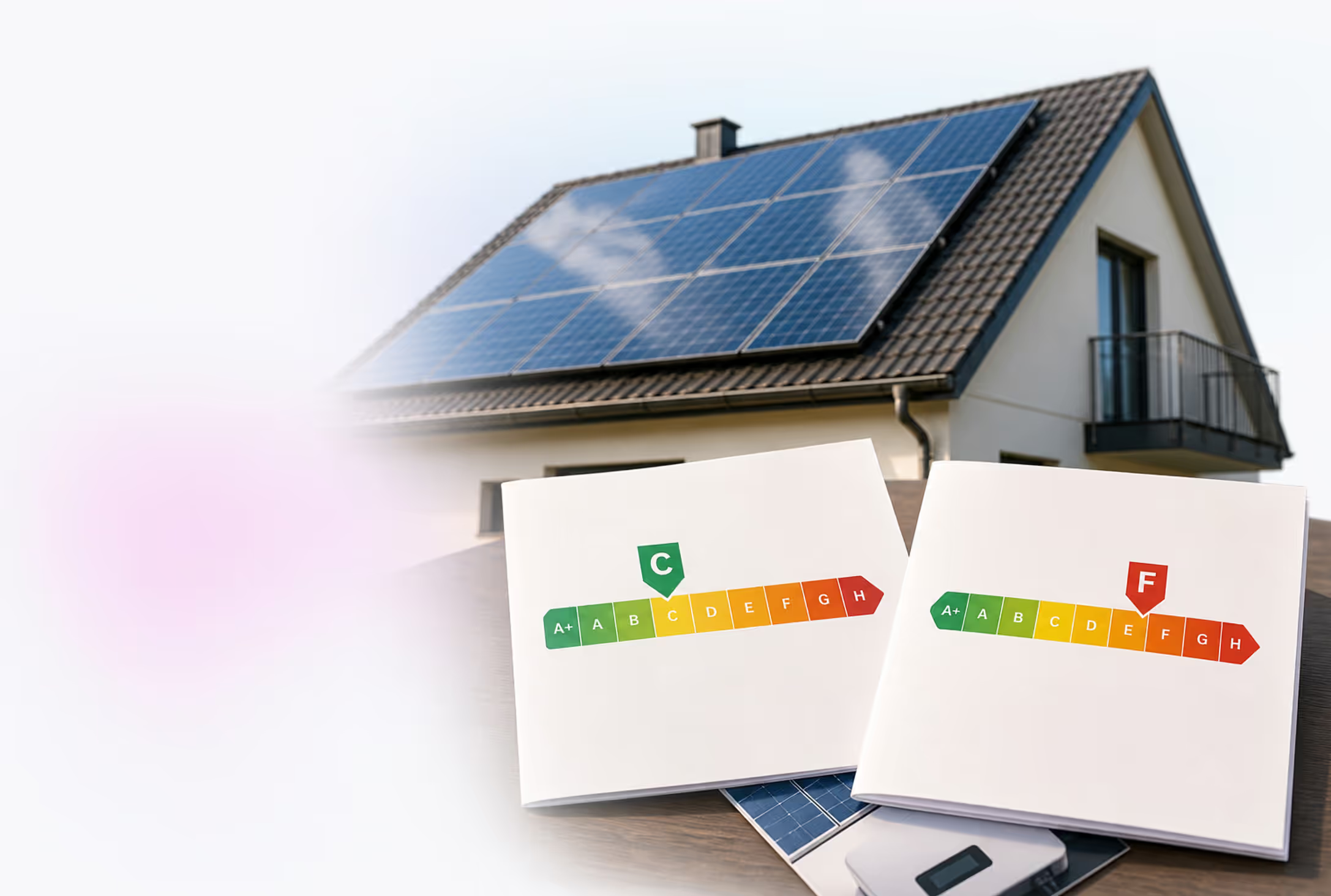
The modules are producing, the electricity bill is down — yet the efficiency class on the energy certificate has not budged. Owners who retrofit a solar installation often expect many solar modules to improve the energy certificate. For classification, what matters above all is whether a consumption-based or demand-based certificate is used.
In this article
Consumption vs demand certificate: why solar works differently by certificate type
You have recently added photovoltaics, the system is running well — and the energy certificate still shows class E or F. The link between photovoltaics and the energy certificate is not about your electricity bill alone — it is about the efficiency class on the document. That feels contradictory, but it is not a calculation error: the certificate does not rate your building by your electricity bill. It follows rules under the German Building Energy Act (GEG), and for residential buildings it primarily evaluates heat demand.
Germany uses two paths to energy classification:
- The consumption-based certificate (§ 82 GEG) derives metrics and efficiency class from recorded consumption for heating and domestic hot water. The basis is typically 36 months of heating cost statements. User behaviour, vacancy, and heating technology shape the result.
- The demand-based certificate (§ 81 GEG) calculates theoretical energy demand from the building envelope, plant technology, and renewable energy per DIN V 18599 — regardless of how sparingly the building is heated.
The decisive point: PV first lowers the electricity bill, but in many cases not the building's actual heat demand. Without direct electric heating, solar power can therefore mainly be applied to auxiliary energy (e.g. pumps, control systems, circulation).
That creates two technically different cases:
- PV without direct electric heating (conventional gas/oil/district heating remains)
- Consumption-based certificate: Auxiliary energies are not a separate lever for the metric here; the recorded heating consumption for heating and domestic hot water remains decisive. The PV effect on class usually stays absent.
- Demand-based certificate: Auxiliary energies are included in the DIN V 18599 overall balance. PV therefore has a direct effect, but it is often limited at first because auxiliary energy is only one part of the overall balance.
- PV with electricity used directly for heating purposes (e.g. heat pump or electric instantaneous
water heater)
- Consumption-based certificate: PV has an indirect effect because measured electricity/fuel purchases for heating and domestic hot water are reduced. That can improve the consumption metric once enough new consumption data are available.
- Demand-based certificate: PV is considered directly in the overall balance; the effect on metric and class is usually stronger than in the pure auxiliary-energy case (pv magazine).
| Certificate type | PV effect on metric/class | Explanation |
|---|---|---|
| Demand-based certificate | Direct (calculated) | PV yield is offset against electricity demand in the monthly balance; primary energy follows from that |
| Consumption-based certificate | No effect | Assessment via heating consumption; PV auxiliary energy is not class-defining |
| Consumption-based certificate | Indirect (exception) | If PV replaces electricity for heating/domestic hot water — e.g. heat pump or electric instantaneous water heater |
| Both | Documented | Type of renewable energy per § 85 para. 1 no. 15 GEG |
Mandatory cases and basics on the demand-based certificate: Demand certificate for residential buildings. On future freedom of choice between certificate types in the GModG cabinet draft.
Demand-based certificate: how PV is credited under DIN V 18599 (partial billing)
If the benefit of a solar installation should show on the energy certificate, a demand-based certificate is hard to avoid. There, photovoltaics enters the calculated energy balance — as part of the metric calculation, not merely as an extra line item.
The key rule is § 23 para. 2 GEG (GEG-Info): the monthly yield of the PV system is set against electricity demand for heating, domestic hot water, ventilation, cooling, and auxiliary energy. Yield is determined per DIN V 18599-9:2018-09; for solar systems, radiation data for the Potsdam reference climate zone (DIN V 18599-10 Annex E) and standard module values (DIN V 18599-9 Annex B) apply.
This is partial billing or monthly balancing. PV electricity is not deducted once per year as a lump sum, but month by month against the respective electricity demand of building services. A lower end energy demand leads to a lower primary energy indicator — and often a better efficiency class.
For existing buildings, the logic applies via § 81 para. 2 GEG together with § 50 para. 3 GEG, which applies the calculation procedures in §§ 22 to 30 — including § 23 — accordingly.
PV first reduces calculated end energy demand (electricity purchases) for building services; from this, a lower primary energy indicator is derived via primary energy factors. It does not reduce envelope heat losses, ventilation losses, or the pure heat demand of a gas boiler — except indirectly when a heat pump creates electricity demand for heating.
With full feed-in or high self-consumption, nothing decisive changes for certificate calculation: the balance offsets the theoretical yield against building electricity demand — regardless of whether you use the power on site or feed it in. The former GEG 2020 priority self-consumption rule no longer applies under GEG 2023/2024 (GEG-Info practice dialogue).
Battery storage is usually not considered in yield determination or offset in typical calculation software under GEG 2023/2024. Plan without a storage bonus in the certificate balance.
For data collection you need module capacity (kWp), orientation, tilt, and technical documentation — see Documents for the energy certificate.
Consumption-based certificate: when PV still helps indirectly
With a consumption-based certificate — the common type for existing buildings with consumption data — weather-adjusted end energy consumption for heating and domestic hot water counts (§ 82 para. 2 GEG). Photovoltaics as electricity generation does not directly change this metric — even though the system is documented under the type of renewable energy used (§ 85 para. 1 no. 15 GEG).
For auxiliary energies (pumps, control systems, circulation), the direct class effect in a consumption-based certificate is in practice small to not visible, because recorded heating consumption remains decisive in the end.
An indirect effect remains possible — as explained in Documents for the energy certificate: if solar power covers heating or domestic hot water demand via electricity — typically with a heat pump or electric instantaneous water heater — recorded heating energy purchases can fall. That only shows up once enough consumption data after the switch exist: under current law, 36 months (§ 82 para. 4 GEG). The GModG cabinet draft proposes 24 months of consumption data, recorded monthly and split by energy carrier.
Two typical cases:
- You retrofit PV only and keep the gas boiler. The electricity bill drops, but the consumption-based certificate is still driven by heating consumption; the class usually changes very little.
- You combine PV with a heat pump or electric instantaneous water heater and wait for three years of consumption data. Then the consumption-based certificate may improve — indirectly via lower recorded energy purchases for heating and domestic hot water.
Read more on renewables and supporting documents in Documents for the energy certificate.
Do you need a new energy certificate after PV retrofit?
PV retrofit alone does not trigger mandatory re-issue (pv magazine). A certificate is valid for ten years (§ 79 para. 3 GEG). A new certificate is required when you sell, let, or lease and no valid certificate exists — or when the existing one has expired (§ 80 GEG).
Important for heat pumps under current law: A heating system replacement on its own does not automatically trigger mandatory re-issue under the current GEG. The duty in § 80 para. 2 GEG is tied to changes within the scope of § 48 GEG (building envelope) and a whole-building calculation under § 50.
If you have a valid consumption-based certificate after installation, you can generally still use it for a future sale — even if PV is not visible on it. To show solar yield on the document, you need a re-issue — in practice, above all a demand-based certificate that includes the system in the calculation.
Looking ahead to EPBD/GModG implementation: In future, major renovation can trigger a certificate duty; the EPBD threshold is defined via building envelope or technical building systems (25% criterion). In addition, the cabinet draft proposes a duty on lease renewal — both are not yet current German law. For more detail, see New energy certificate duty on lease renewal and renovation.
PV and heat pump: the strongest combination for a better class
Photovoltaics and a heat pump work especially well together in a demand-based certificate. The heat pump raises electric heating and domestic hot water demand — creating more room for monthly PV offset per § 23 para. 2 GEG. How heating technology shapes the certificate is covered in How a heat pump affects the energy certificate, including heat pump plus PV combinations.
At the same time, the heat pump paradox applies — explained separately: grid electricity for the heat pump is weighted by the primary energy factor 1.8 (current GEG) in the step from end energy to primary energy. The GModG cabinet draft proposes 1.5 (§ 22 GEG, BBSR – primary energy factors, heating system comparison article). PV credits can offset this; the result depends on system size, building, and heating profile. Why the class often stays less green than expected: Heat pump and energy certificate.
In a consumption-based certificate, the effect is delayed: as long as 36 months of consumption data still reflect the old heating system, the class stays worse than expected.
When does a new certificate become legally required?
For PV + heat pump in practice, three cases matter:
- Heat pump replacement only, no envelope measures: Under the current GEG, this usually does not create an automatic legal duty to re-issue; however, a new certificate can still be strategically useful to make the improved system visible for sale or letting.
- Major renovation (thresholds reached): Under EPBD logic, a certificate duty can apply — including where the threshold is reached via technical building systems. The exact national setup depends on the final GModG version.
- Sale, letting, lease, or (in future) lease renewal: Here, presentation/issuance obligations apply under the respective legal status; the key question is whether a valid certificate already exists.
Sale and letting: when a demand-based certificate pays off after PV
Before sale or letting, ask which certificate type makes the PV effect visible at all. The overview does not replace case-by-case review, but it points you in the right direction:
| Situation | Recommendation |
|---|---|
| PV retrofitted, valid consumption-based certificate exists | Old certificate usable — PV benefit stays invisible |
| PV + heat pump, sale planned | Consider demand-based certificate — PV and heat pump calculated together |
| PV only, gas heating, consumption data available | Consumption-based certificate often practical; PV barely improves class |
| Certificate expired | Re-issue — choose certificate type anew (§ 80 GEG) |
| Multi-family building with roof PV | One certificate per building; see MFH guide |
If unsure which type yields the better class, both variants can be calculated. With Energyausweis Smart™, demand and consumption certificates are calculated in parallel; the one with the better result is delivered.
Key takeaways
- A direct class effect exists only in a demand-based certificate: PV yield is credited in the DIN V 18599 balance and can lower metric/class.
- Separate auxiliary energy from electric heating load: Without electric heating, PV often affects only auxiliary energy (small effect); with heat pump/instantaneous water heater, the effect is much stronger.
- A consumption-based certificate usually does not change without electric heating: It rates weather-adjusted heating energy consumption (§ 82 GEG); a PV effect there is mainly indirect via electric heating technology.
- A PV retrofit typically does not require a new certificate: A new one becomes relevant mainly when the certificate expires (10 years) or for sale/letting without a valid certificate (§ 79, § 80 GEG).
- If a better class is the goal, PV + heat pump is often strongest: More electric demand creates more room for PV crediting in the monthly balance.
- Full feed-in vs self-consumption does not change the demand-certificate logic: What matters is the theoretical yield in the balance (§ 23 para. 2 GEG).
Conclusion
Photovoltaics and the energy certificate fit together — but not equally in every certificate type. To make solar visible in the efficiency class, you need a demand-based certificate where PV enters the monthly electricity-demand balance; the primary energy indicator is derived from that via primary energy factors. Without direct electric heating, the effect is often limited to auxiliary energies and therefore rather moderate. In a consumption-based certificate, measured heating consumption counts; a PV effect there arises mainly indirectly when electricity is used directly for heating or domestic hot water.
The strongest combination remains PV plus heat pump in a demand-based certificate. Retrofit alone does not force re-issue — on sale, letting, or expiry, it pays to choose the right certificate type. Especially if a heat pump is already installed or domestic hot water is covered electrically, issuing a new certificate can make sense even before the ten-year validity period ends and often leads to a marked improvement in efficiency class.